Women Voters Outnumber Men in 23 Seats in Bengal Poll Phase
News Mania Desk /28th April 2026

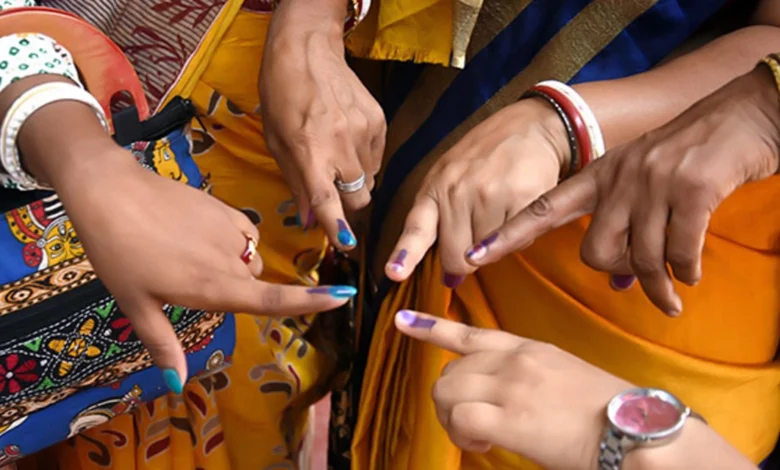
Kolkata, April 28: In a significant electoral trend, women voters have outnumbered men in 23 of the 142 assembly constituencies going to the polls on Wednesday in the West Bengal Legislative Assembly election 2026, underscoring the growing influence of female electorate in the state’s political landscape.
The data, compiled after the Special Intensive Revision (SIR) of electoral rolls, reveals that this pattern is largely concentrated in and around Kolkata and adjoining urban belts, including Salt Lake and neighbouring municipalities.
Leading the list is Jadavpur, where women voters exceed men by 11,759, making it the constituency with the highest gender gap in favour of female electors. Behala West follows, with approximately 1.37 lakh women voters compared to 1.28 lakh men.
Other constituencies with a notable surplus of women voters include Tollygunge, Behala East, Dum Dum, Bidhannagar, Rajarhat Gopalpur, Rashbehari, Baranagar and Burdwan South, rounding off the top ten.
At the lower end of the spectrum, Barasat recorded a modest surplus of 373 women voters, while Champdani had 122 more women voters than men.
Detailed figures from select constituencies further illustrate the trend. In Bidhannagar, there are 1,04,979 women voters compared to 98,891 men, while Rashbehari has 82,137 women and 76,263 men. Similarly, Baranagar records 95,847 women against 90,690 men, and Kasba shows 1,34,158 women compared to 1,31,451 men.
The trend is not entirely new. During the first phase of polling, 18 constituencies witnessed higher female turnout than male voters. Kurseong topped that list, with 87,002 women voters participating against 83,405 men.
Political observers note that the rising number of women voters, particularly in urban constituencies, could play a decisive role in shaping electoral outcomes. Parties across the spectrum are expected to sharpen their focus on women-centric issues, including safety, healthcare, and welfare, as this demographic continues to assert its presence at the ballot box.
The increasing participation and numerical advantage of women voters marks a notable shift in the electoral dynamics of West Bengal, reinforcing their role as a key determinant in the ongoing assembly elections.