US-Cuba Clash at UN Over Corruption Allegations and Rolex Watches
News Mania Desk/ Piyal Chatterjee/ 29th October 2026

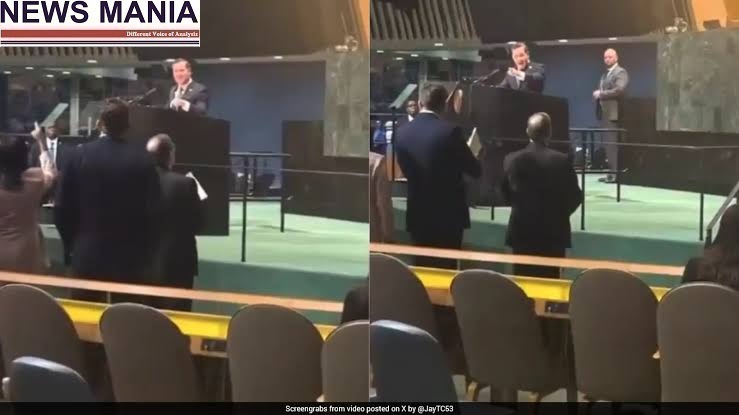
A heated confrontation erupted between Cuban Foreign Minister Bruno Rodriguez Parrilla and US Ambassador to the United Nations Mike Waltz during a UN General Assembly session on Tuesday, as the two officials exchanged accusations over Cuba’s leadership and Washington’s long-standing economic embargo against Cuba.
The dispute took place ahead of a vote on a resolution condemning the US trade and economic embargo against Cuba. During his address, Waltz accused the Cuban government of corruption and alleged that members of its political elite enjoyed luxurious lifestyles despite the country’s economic difficulties.
Waltz displayed photographs of former Cuban leader Fidel Castro and current President Miguel Diaz-Canel, claiming both had worn Rolex watches. He argued that the value of the watches illustrated the disparity between the leadership’s alleged wealth and the earnings of ordinary Cubans.
Rodriguez Parrilla approached the podium while Waltz was speaking and accused the American envoy of lying. The Cuban foreign minister also raised a procedural objection under Rule 71 of the UN General Assembly’s rules, which allows delegates to raise points of order.
Waltz responded by telling Parrilla to move away from the podium, accusing him of attempting to intimidate the American delegation. Parrilla continued to challenge Waltz’s statements, and the verbal confrontation escalated before proceedings were suspended.
The incident reportedly continued beyond the podium. A video obtained by the New York Post allegedly showed US Ambassador Waltz’s publicist, J.P. Freire, being struck by a member of the Cuban delegation who reportedly attempted to take Freire’s iPhone while he recorded the confrontation.
The dispute reflects longstanding US-Cuba tensions over the embargo, which has remained in place for decades despite repeated international calls for its removal.
Parrilla accused the United States of pressuring other countries to oppose the resolution. He also argued that US fuel restrictions on Cuba had worsened the country’s economic and humanitarian crisis, placing additional pressure on its healthcare system and threatening access to essential services.
The confrontation highlighted the continuing diplomatic divide between Washington and Havana, with disagreements over human rights, economic policy and the Cuba embargo remaining central to their strained relationship.