Negative Impact of Idol Immersions on the Environment
Saikat Kumar Basu/ 23rd November 2026

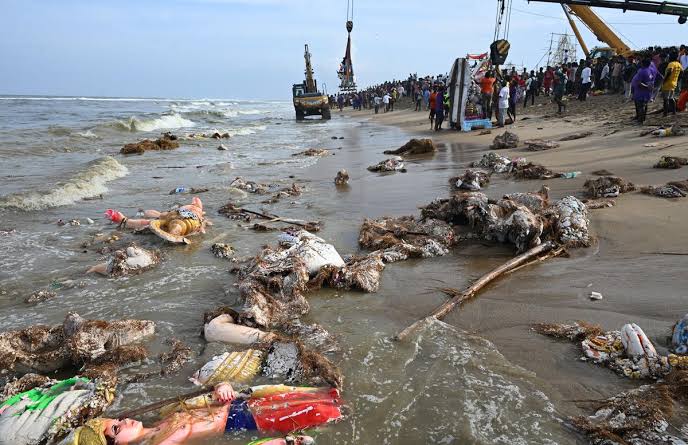
In Indian culture, festivals are an integral part of human social and spiritual life. The tradition of crafting and subsequently immersing idols—seen in festivals such as Durga Puja, Kali Puja, Saraswati Puja, and Vishwakarma Puja—is ancient. Symbolically, the immersion of an idol represents the reunion of the created form with nature. However, in modern times, the use of synthetic materials, chemical paints, plastics, and other pollutants in the construction of idols, combined with unplanned immersion in water bodies, has placed a severe strain on the environment.
The most direct impact of idol immersion is felt by rivers, canals, ponds, lakes, and other water bodies. Synthetic paints or those containing heavy metals, often used on idols, can dissolve in water and contaminate the aquatic environment. Furthermore, the structural components of the idols—plaster, fabrics, plastics, thermocol, artificial flowers, and various decorative items—accumulate in the water. Over time, these materials break down and settle as pollutants within the water column and the underlying sediment.
This process degrades water clarity and quality, adversely affecting aquatic life. The entire aquatic food chain—including fish, amphibians, aquatic insects, mollusks, plants, and microorganisms—can be impacted.
A healthy water body is a complex, living ecosystem where various organisms—from microorganisms to fish, turtles, frogs, insects, and aquatic plants—are interconnected. When the materials and chemicals from idols dissolve in the water following immersion, this delicate balance can be disrupted.
In particular, the accumulation of excessive organic matter can lead to a depletion of dissolved oxygen as the material decomposes. This creates adverse conditions for fish and other aquatic organisms. In the long term, the ecological health of the water body can deteriorate.
In many cases, bright synthetic dyes are used instead of traditional, natural colors. Some of these dyes may contain lead, chromium, mercury, or other harmful chemical substances. Once they enter a water body, these substances can accumulate in the bodies of aquatic organisms and move through various levels of the food chain. Therefore, it is crucial to use eco-friendly, water-based, and non-toxic paints when crafting idols.
The use of plastic, thermocol, and synthetic materials for decorating idols is particularly harmful to the environment. These materials do not decompose easily and can remain in water bodies for a long time. Over time, they break down into smaller fragments, contributing to the issue of microplastics. If aquatic organisms ingest these particles or debris, it can have detrimental effects on their health.
Following immersion, structural frameworks, bamboo, ropes, fabrics, plastics, and other materials can accumulate on the beds of rivers or ponds. This can disrupt the natural flow and navigability of the water body. In urban areas, the accumulation of such waste can also impair water drainage systems.
After immersion, remnants of the idols often wash up on riverbanks or the edges of water bodies. Through rainwater runoff and erosion, these substances can spread into the surrounding soil. Chemical dyes, plastics, and other non-biodegradable materials can have long-term negative effects on soil quality and soil biodiversity. Noise and Air Pollution
Processions associated with the immersion of idols—involving excessive noise, fireworks, and the use of vehicles—place a significant strain on the environment. High noise levels can disrupt the behavior and communication systems of humans, as well as those of birds, bats, and other animals. Furthermore, traffic congestion and the increased number of vehicles contribute to air pollution and higher carbon emissions.
Reducing the environmental impact of idol immersion does not require abandoning religious and cultural traditions; rather, it necessitates making them more eco-friendly.
To achieve this:
1. Natural and biodegradable materials—such as clay, straw, and bamboo—should be used.
2. Paints containing harmful heavy metals like lead, mercury, and chromium should be avoided in favor of natural, eco-friendly alternatives.
3. The use of non-biodegradable decorative materials—such as thermocol, PVC, and various plastics—must be minimized.
4. Designated, controlled immersion sites could be established, where waste can be separated from the idols for collection and recycling.
5. Water bodies should be promptly cleaned following the immersion, with materials like bamboo, fabric, and plastic properly sorted and recovered.
6. Artificial reservoirs could be used instead of immersing idols directly into natural water bodies.
7. Through the collaborative efforts of Puja committees, municipal authorities, environmental organizations, and the local administration, the concept of a “Green Puja”—an eco-friendly celebration—should be promoted.
8. Above all, public awareness and environmental education must be fostered, helping people understand that protecting nature is an integral part of both religious and social responsibility.
The core philosophy behind the immersion of idols is a return to nature. However, if this act of returning ends up polluting nature itself, it is essential to rethink how we conduct our festivals. Religious beliefs and environmental conservation are not mutually exclusive. Rather, deep within Indian tradition lies a philosophy that teaches reverence for nature—respect for rivers, mountains, trees, and all living beings. Therefore, instead of banning the immersion of idols, we should transform the practice into an eco-friendly, socially-driven movement. An idol should serve as a symbol of festive joy, not as a cause for the death of a river or water body.