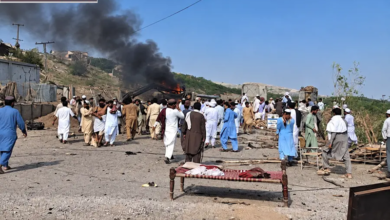
Sentences from Syrian courts For war crimes, Bashar al-Assad will be executed in absentia
News Mania Desk/ Piyal Chatterjee/ 11th August 2026

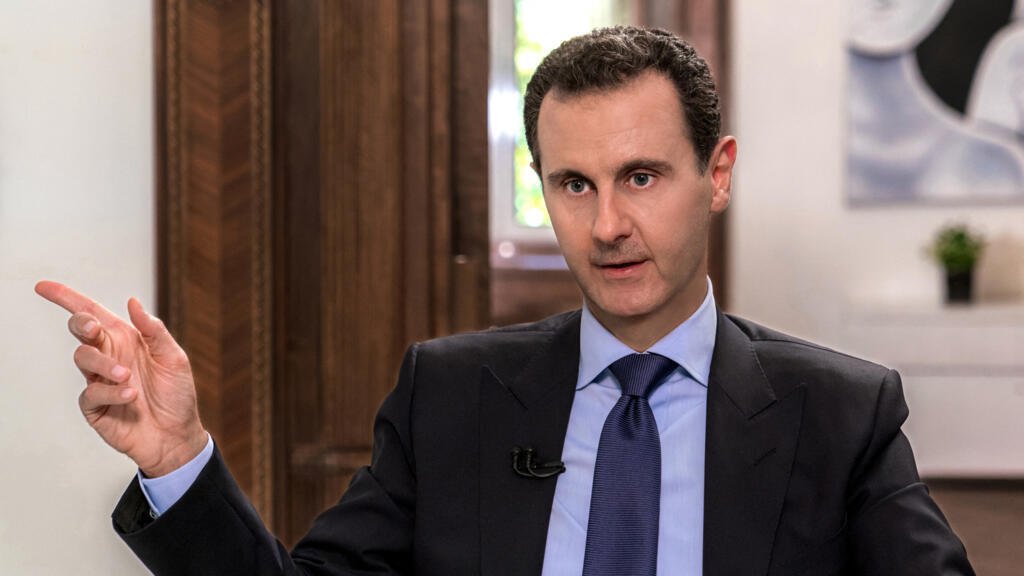
Former Syrian President Bashar al-Assad and his brother Maher were condemned to death in absentia by a court for war crimes and crimes against humanity committed during the country’s 14-year civil war, which claimed the lives of over 500,000 people. After the totalitarian administration was overthrown in just 11 days in December 2024 due to a quick rebel onslaught, the two men fled to Moscow.
In order to put an end to protests that began in 2011, the former president and his brother, who managed the dreaded fourth division and was regarded as the regime’s top security officer, orchestrated a savage crackdown in which government troops arbitrarily detained, killed, and tortured people.
According to the court, Bashar al-Assad was given the death penalty for “torture, arbitrary arrest, and crimes against humanity” in addition to “premeditated and intentional murder of more than one person and of children.” Although Russian officials have previously turned down calls to extradite their former Syrian friends, it stated that it will endeavour to prosecute the two men thru international legal channels.
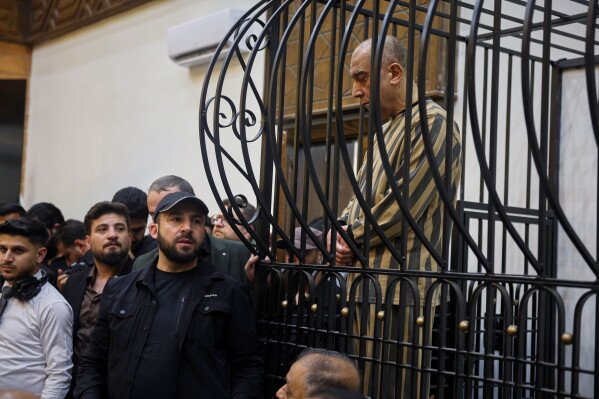
Atef Najib, Assad’s cousin and the former chief of political security in Daraa, was also given a death sentence by the court. In 2011, a group of fifteen teenage boys who had written anti-Assad slogans on a wall were tortured by Najib. This incident sparked widespread protests in the southern Syrian region, which later extended throughout the nation.
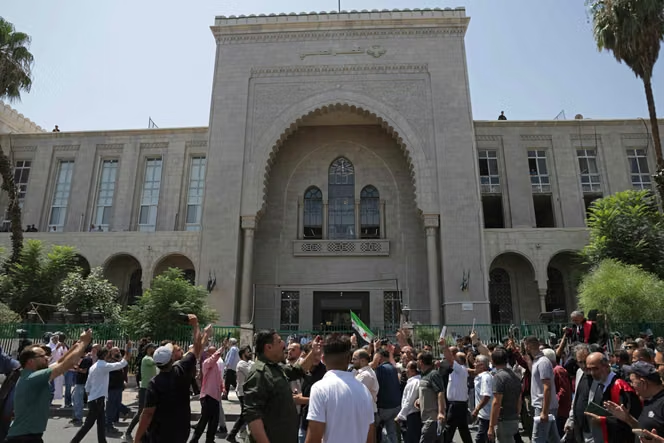
Pictures of Najib listening to the proceedings while wearing a jail uniform and being held in a cage in court made his trial widely reported. In its quest for transitional justice, which many believe is essential to mending divisions in the nation, the Syrian government has portrayed his prosecution as a historic case.
In the post-Assad era, violence has erupted in Syria. In March 2025, al-Assad-aligned terrorists attacked government forces, resulting in a wave of retaliatory killings that murdered some 1,500 civilians, the most of whom were Alawites. During his reign, Al-Assad had considerable support in the coastal heartland of the Islamic Alawite sect, which is a minority group in Syria.
In July 2025, over 1,700 people were killed in massacres in Suweida, Syria, due to sectarian violence, with continued targeting of Alawite civilians in northern Syria. The Syrian government has initiated steps for transitional justice by establishing committees and arresting officials from the Assad era in an effort to mitigate intercommunal violence. Bashar al-Assad, who became president in 2000 at 34, initially appeared as a reformer but ultimately became known for his brutal crackdown on the revolution, allowing severe repression by the security forces.