
Sam Altman raises concerns over children developing emotional bonds with AI Chatbots.
News Mania Desk/ Piyal Chatterjee/ 11th November 2026

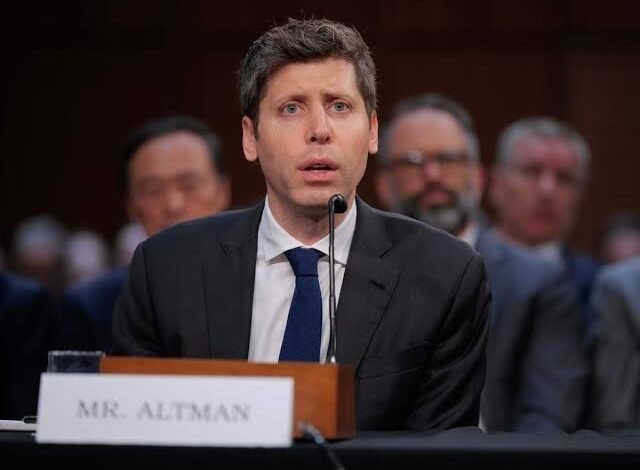
OpenAI CEO Sam Altman has expressed concerns about children developing emotional relationships with artificial intelligence (AI) chatbots, saying he would not want his son to consider an AI bot his best friend. His remarks have renewed discussions about child safety, AI companionship and the psychological impact of technology on young users.
Altman made the statement during a US Senate hearing in May 2025, where he was asked whether he wanted his child to develop a close friendship with an AI chatbot. He responded negatively, emphasising that children require significantly stronger protection when interacting with AI platforms than adult users.
In a more recent interview with Vanity Fair, published on October 5, 2026, Altman discussed the challenges of raising children in an increasingly technology-driven world. He said he had not yet decided at what age he would allow his children to use ChatGPT. The OpenAI chief also supported limiting children’s exposure to digital devices, arguing that outdoor activities, nature and real-world experiences are important during early development.
Altman acknowledged that children growing up today would inevitably encounter AI and need to learn how to use it. However, he questioned whether introducing conversational AI during early childhood was necessary, particularly because its long-term effects on developing brains remain uncertain.
His concerns reflect growing warnings from child development experts and psychologists about the risks of children forming emotional attachments to AI companions. These chatbots are designed to simulate conversations and relationships, potentially encouraging young users to treat them as friends, mentors or confidants despite the absence of genuine human emotions.A Common Sense Media survey published in July 2025 found that 72% of American teenagers aged 13 to 17 had used AI companions. The research also revealed that some teenagers preferred discussing serious personal issues with chatbots rather than real people.
The American Psychological Association (APA) has warned that young users may struggle to distinguish simulated empathy from genuine human understanding. Strong emotional attachments to AI characters could also affect their ability to develop meaningful relationships and social skills.
Meanwhile, UNICEF has called for stronger safeguards in AI systems, including better privacy protection, transparency, human oversight and age-appropriate restrictions.As AI becomes increasingly integrated into everyday life, Altman’s remarks highlight the importance of balancing technological innovation with children’s mental health, online safety and real-world human connections.nings performance, with higher revenue and operating profitability providing support despite continuing challenges in some of its overseas markets.