Nepal Floods: Rescue Operations Intensify as Death Toll Crosses 1,200, Thousands Remain Missing
News Mania Desk/ Piyal Chatterjee/ 5th September 2026

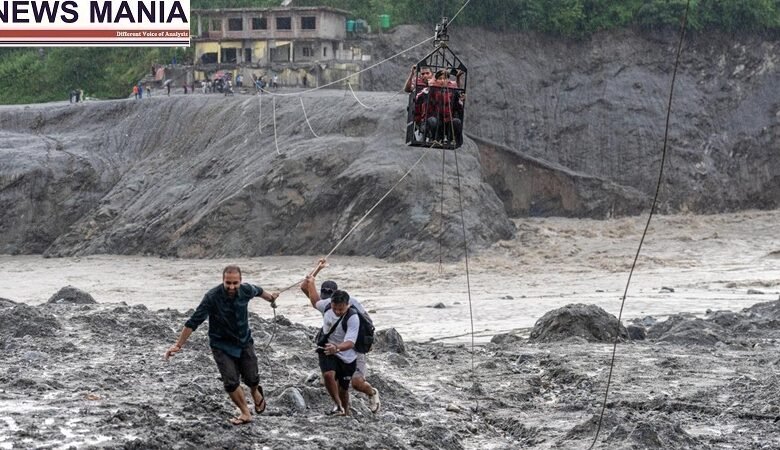
Rescue operations continued across flood-ravaged parts of Nepal on Friday as authorities struggled to locate thousands of people still missing after devastating flash floods swept through the country’s northern districts. The disaster, which struck on August 26, caused widespread destruction in areas including Rasuwa and Nuwakot. The latest reports put the death toll in Nepal at more than 1,200, while thousands of people remain unaccounted for. Rescue teams are continuing to search through mud, debris and damaged infrastructure for survivors and victims.
The Nepal Army, police and other emergency personnel have been working around the clock in some of the worst-hit areas. However, the scale of destruction and the mountainous terrain have made rescue efforts extremely difficult. Roads and bridges were washed away, leaving several communities isolated and forcing authorities to depend heavily on helicopters and other specialised equipment.
The floods also caused extensive damage to hydropower projects along the Trishuli valley. Hundreds of workers are believed to have been trapped inside tunnels at several hydropower facilities, adding another challenging dimension to the rescue mission. Engineers and rescue personnel have been using tunnel maps, heavy machinery and oxygen supplies to reach people who may still be alive.
In a major breakthrough on Friday, rescuers pulled two hydropower workers alive from a tunnel at the Upper Trishuli 3A Hydropower Station, nine days after the disaster. The two men had been trapped about 170 metres inside the tunnel. Their rescue has renewed hopes that other workers believed to be trapped underground could also be found alive.
Officials believe around 500 workers could still be trapped in hydropower tunnels, although the exact number remains uncertain. Rescue teams have intensified efforts after reports of voices being heard from some blocked sections.
The catastrophe has also left thousands of families searching for relatives. With communication networks disrupted and access to several affected locations severely restricted, many families have struggled to obtain information about missing loved ones.
Beyond the immediate rescue effort, Nepal faces a massive reconstruction challenge. Thousands of houses have been destroyed or damaged, while roads, bridges, hydropower facilities and other critical infrastructure have suffered extensive losses. Authorities estimate that around 20,000 homes will need to be rebuilt. Despite the enormous challenges, rescue personnel continue to search affected areas, hoping to find more survivors while recovering bodies and providing assistance to communities cut off by the floods.