

Introduction
The Sundarbans, located in the vast delta of the Ganges, Brahmaputra and Meghna river systems, is one of the most ecologically significant and climate-sensitive regions in the world. Shared between India and Bangladesh, it contains the world’s largest contiguous mangrove ecosystem and supports an extraordinary diversity of plants, animals, aquatic organisms and human communities. The Indian Sundarbans, situated largely in the South and North 24 Parganas districts of West Bengal, are home to millions of people whose lives depend directly or indirectly on agriculture, fishing, forest resources, aquaculture and other nature-based occupations.
Climate change has emerged as one of the greatest threats to the ecological and socio-economic sustainability of the Sundarbans. Rising sea levels, increasing salinity, stronger cyclones, irregular rainfall, coastal erosion, flooding, waterlogging and changing temperatures are collectively transforming both the landscape and the lives of its inhabitants. The Sundarbans has therefore become a powerful example of how climate change is not merely an environmental problem but also a humanitarian, economic, agricultural and social justice issue. Recent scientific reviews continue to identify the Sundarbans as a major climate-vulnerability hotspot where ecological stress and human livelihoods are closely interconnected.
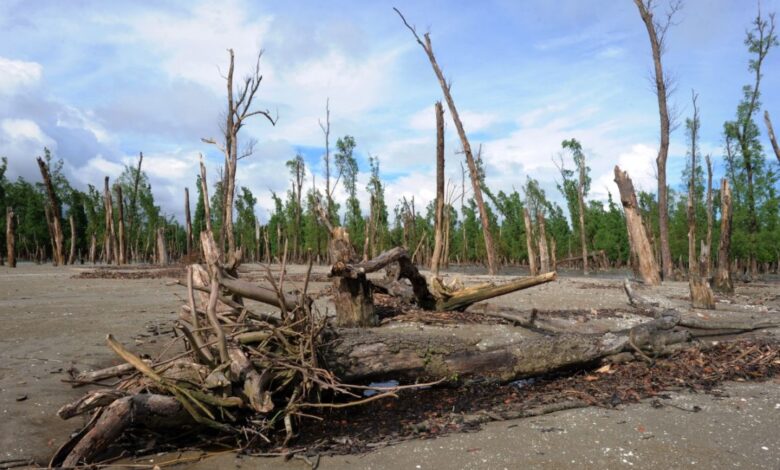
Rising Sea Level and Land Loss
One of the most serious consequences of climate change in the Sundarbans is sea-level rise. The region consists primarily of low-lying islands, mudflats and deltaic landscapes that are highly vulnerable to inundation. Rising sea levels increase tidal flooding, coastal erosion and the submergence of land.
Several islands and coastal areas have already experienced severe erosion and shrinking landmass. Human settlements, agricultural fields, roads and freshwater ponds are increasingly threatened by tidal action and storm surges. The gradual disappearance of land also results in displacement and migration of local populations.
Scientific modelling suggests that, under different sea-level-rise scenarios, the Indian Sundarbans could experience substantial mangrove loss by the end of this century if current management practices remain unchanged. The consequences of land loss are profound including loss of agricultural land, destruction of houses and villages, damage to roads and infrastructure, displacement of families, increased climate migration, pressure on urban areas such as Kolkata, and increased poverty and landlessness.For poor island communities, land erosion often means the complete loss of their economic security and ancestral identity.
Increasing Frequency and Intensity of Cyclones
The Sundarbans has always experienced tropical cyclones because of its location along the Bay of Bengal. However, climate change and rising sea-surface temperatures are increasing concerns about the intensity and destructive capacity of extreme weather events.
Cyclones such as Aila, Amphan, Yaas and other severe storms have demonstrated the extreme vulnerability of the region. These cyclones bring high-speed winds, storm surges, tidal flooding, breaches in embankments, saltwater intrusion, destruction of houses, crop losses, damage to fisheries; loss of livestock, and destruction of infrastructure.
When embankments collapse during cyclones, saline water enters villages and agricultural fields. In many cases, farmland remains unsuitable for cultivation for several years because of accumulated salt. Climate-related changes in rainfall, sea level, storm surges, flooding and embankment breaches are increasingly recognized as major threats to food security and human well-being in the Indian Sundarbans.
Salinity: A Growing Threat to Human Life and Agriculture
Salinity intrusion is one of the most visible and serious manifestations of climate change in the Sundarbans. Rising sea levels, tidal inundation, cyclone-induced flooding and reduced availability of freshwater contribute to increasing salt concentrations in soil and water.
The local people often refer to saline water as nona jol. Salinity affects almost every aspect of life in the Sundarbans. Effects of salinity include reduction of soil fertility, declining agricultural productivity, contamination of freshwater ponds, shortage of drinking water, damage to crops, changes in fish populations, deterioration of human health, and increased pressure on women responsible for household water collection.
Recent research has specifically highlighted soil salinization as a major climate-related challenge affecting farming, freshwater availability and rural livelihoods in the Sundarbans. The scarcity of potable freshwater is particularly distressing for women and children. In many villages, women have to travel long distances to collect safe drinking water. Thus, climate change also increases gender inequality and the daily burden of women.
Impacts on Agriculture
Agriculture is an important source of livelihood in the inhabited islands of the Sundarbans. Rice cultivation remains a major agricultural activity, along with vegetables, pulses, oilseeds and other crops. However, climate change is making farming increasingly uncertain and difficult. Major agricultural impacts include saline water entering agricultural fields reduces the ability of plants to absorb water and nutrients. High salt concentrations damage roots and reduce crop productivity. Rice, the principal crop of the region, is particularly affected in areas experiencing severe salinity.
Heavy rainfall, tidal flooding and poor drainage frequently result in waterlogging. Prolonged waterlogging damages crop roots and reduces soil productivity. Changes in monsoon patterns create uncertainty for farmers. Delayed rainfall can affect sowing, while excessive rainfall can destroy standing crops. Cyclones frequently destroy mature crops and inundate farmland with saline water. Farmers may lose an entire season’s income within a few hours.
Many farmers are unable to cultivate multiple crops because of lack of freshwater irrigation, salinity and waterlogging. Consequently, agricultural land often remains fallow during parts of the year. Recent agricultural research from the West Bengal Sundarbans identifies soil salinity, waterlogging, inadequate irrigation and climate variability as major constraints on crop productivity and farmer livelihoods.
Threats to Biodiversity
The Sundarbans is internationally famous for its exceptional biodiversity. It supports mangrove vegetation, fish, crustaceans, reptiles, amphibians, birds and mammals, including the iconic Royal Bengal Tiger. Climate change threatens this biodiversity in multiple ways. Mangroves are highly adapted to saline and tidal conditions, but different species have different levels of salt tolerance. Increasing salinity may change the composition and distribution of mangrove forests.
Climate-driven salinity changes can favour salt-tolerant species while reducing populations of less salt-tolerant and economically valuable species. Scientific studies have projected significant stress on species such as Heritiera fomes (Sundari) under increasing salinity conditions. Such changes could alter the ecological character of the entire forest. The Royal Bengal Tiger depends upon the mangrove ecosystem for habitat and prey. Sea-level rise and habitat fragmentation can reduce available territory for wildlife.
Climate change may indirectly increase habitat loss and habitat fragmentation, competition among animals, changes in prey populations, and human-wildlife conflict. As human settlements lose land and livelihoods, people may become increasingly dependent on forests and rivers. This increases encounters between humans and wildlife, including tigers. Thus, climate change can intensify the already complex problem of human-tiger conflict.
Impacts on Fisheries and Aquatic Biodiversity
Fishing is one of the most important occupations in the Sundarbans. Thousands of families depend upon rivers, creeks and estuaries for fish, crabs, prawns and other aquatic resources. Climate change affects aquatic ecosystems through changes in water temperature, increased salinity, altered river flow, coastal flooding; cyclones, changes in breeding grounds, and habitat destruction. Mangrove ecosystems act as important nursery grounds for numerous fish and aquatic species. Any decline in mangrove health can therefore affect fisheries.
Changes in salinity may also lead to the decline of freshwater fish species while favouring some brackish-water organisms. Such ecological changes can negatively affect traditional fishing communities and local food systems.The decline of fisheries also has nutritional consequences because fish represents an important source of protein for local communities.
Impact on Livelihood and Rural Economy
The economy of the Sundarbans is heavily dependent on natural resources. Major livelihood activities include agriculture; fIshing, crab ccollectionl, honey collection, forest-based activities, aquaculture; small-scale livestock rearing, tourism, and daily wage labour. Climate change threatens all these sectors simultaneously. For example, a cyclone may destroy crops, damage fishing boats, kill livestock, contaminate ponds and destroy houses. A family dependent on several natural resources can therefore lose multiple sources of income at the same time.
The economic consequences include increased poverty, indebtedness, food insecurity, loss of employment, seasonal unemployment, forced migration, child labour and acute social insecurity. The deterioration of agriculture and natural-resource-based livelihoods has contributed to migration from vulnerable rural areas.
Climate Migration and Social Transformation
Climate-induced migration is becoming an important social consequence of environmental change in the Sundarbans. When agricultural land becomes saline or disappears due to erosion, families often have little choice but to migrate in search of work. Many people move temporarily or permanently to Kolkata and other urban centres.
Migration creates new social problems, such as separation of families, increased vulnerability of women; insecure urban employment, loss of traditional knowledge, declining rural population; increased pressure on cities, abd rapid social and cultural dislocation. Climate change is therefore gradually transforming the demographic and cultural landscape of the Sundarbans.
Impacts on Women and Children
Climate change does not affect all people equally. Women, children, elderly persons and economically marginalized communities are often the most vulnerable.
Women face particular difficulties because they are often responsible for collecting drinking water, cooking and household management; caring for children and elderly family members; supporting agricultural activities, and managing food during disasters. After cyclones and floods, women may experience increased workloads and reduced access to health services.
Children suffer from malnutrition; disrupted education, displacement; water-related diseases, psychological trauma caused by disasters. Therefore, climate change in the Sundarbans must also be understood as an issue of social equity and climate justice.
Public Health and Water Security
Climate change has serious implications for public health. Flooding and salinity affect drinking-water availability. Contaminated water may increase the risk of water-borne diseases. Extreme heat and humidity can also affect human health and labour productivity.
Important health-related challenges include drinking water scarcity, water contamination; malnutrition; diarrhoeal diseases, skin diseases, heat and psychological stress, and repeated disaster-related injuries. The destruction of freshwater ponds during cyclones can create a prolonged water crisis in affected communities. Water security is therefore one of the central challenges for the future of the Sundarbans.
Loss of Ecosystem Services
The mangrove forests of the Sundarbans provide invaluable ecosystem services. They protect coastal communities from storm ssurges, reduce wave energy, stabilize coastlines, store carbon, support fisheries; provide habitat for wildlife; maintain nutrient cycles, and support local livelihoods. Mangrove degradation caused by sea-level rise, erosion and other environmental pressures weakens this natural protective shield.
This creates a dangerous cycle:
Climate change → mangrove degradation → weaker coastal protection → greater cyclone damage → increased human vulnerability.
Protecting and restoring mangrove ecosystems is therefore essential not only for biodiversity conservation but also for climate adaptation and disaster-risk reduction.
Adaptation Strategies for the Sundarbans
The future of the Sundarbans depends on the adoption of strong, integrated and community-based climate adaptation strategies.
1. Mangrove Restoration: Large-scale restoration of degraded mangrove areas can reduce coastal erosion, protect embankments, provide wildlife habitat, increase carbon sequestration, and protect communities from storm surges. Native mangrove species should be prioritized in restoration programmes.
2. Climate-Resilient Agriculture: Farmers need access to salt-tolerant rice varieties, flood-tolerant crops, short-duration crops, improved drainage, rainwater harvesting, integrated farming systems, organic soil management, and climate-smart agricultural technologies.
Research on suitable salt-tolerant agricultural systems is particularly important for the future of Sundarbans farming. Recent land-suitability research also suggests that carefully planned salt-tolerant agriculture could strengthen livelihood resilience without sacrificing critical ecological buffers.
3. Rainwater Harvesting and Freshwater Conservation: Freshwater security should be treated as a priority. Possible measures include rainwater harvesting, pond restoration, freshwater reservoirs, community water-storage systems, and improved drinking-water infrastructure.
4. Strengthening Embankments: Climate-resilient embankments are essential for protecting villages and agricultural land. However, embankments should be developed in combination with natural solutions such as mangrove belts, vegetative buffers, wetland restoration, and natural coastal barriers.
5. Sustainable Livelihood Diversification: Communities should not depend entirely on climate-sensitive occupations. Alternative livelihood opportunities may include eco-tourism, sustainable aquaculture, apiculture, handicrafts, value-added agricultural products, medicinal plant cultivation, small-scale food processing, and green entrepreneurship. Diversified income can reduce dependence on a single vulnerable livelihood.
6. Community Participation and Indigenous Knowledge: Local people possess generations of experience in dealing with cyclones, tidal floods, salinity, fishing, forest resources, and traditional agriculture. Climate adaptation programmes should therefore integrate scientific knowledge with local and indigenous ecological knowledge.
Community participation is essential for successful conservation and climate resilience. Recent reviews emphasize the importance of locally informed, inclusive and equity-focused adaptation strategies across the Sundarbans landscape.
Conclusion
The Sundarbans stands at the frontline of global climate change. Rising sea levels, coastal erosion, increasing salinity, stronger cyclones, irregular rainfall and ecological changes are threatening its fragile environment and the millions of people who depend upon it.
The impacts of climate change are interconnected. The destruction of mangroves affects biodiversity and coastal protection. Salinity affects agriculture and freshwater availability. Cyclones destroy houses, crops and fishing infrastructure. Declining livelihoods contribute to poverty and migration. Biodiversity loss affects fisheries, forests and ecosystem services.
The future of the Sundarbans therefore cannot be protected through isolated interventions. It requires an integrated approach combining climate mitigation, mangrove conservation, biodiversity protection, climate-smart agriculture, freshwater conservation, disaster preparedness, livelihood diversification and social justice.
The Sundarbans is not simply a forest or a geographical region. It is a living ecological civilization where rivers, forests, wildlife and human communities coexist in a delicate balance. Protecting the Sundarbans from climate change is essential not only for the people of West Bengal and Bangladesh but also for global biodiversity, coastal security and the future of one of the world’s most remarkable natural ecosystems.
Saving the Sundarbans means protecting biodiversity, securing livelihoods, conserving a unique cultural heritage and building resilience against one of the greatest challenges facing humanity—the climate crisis.