Invoking Bengal famine, India warns UNSC that conflict costs are unevenly distributed
News Mania Desk/ Piyal Chatterjee/ 25th November 2026

India has warned the United Nations Security Council (UNSC) that the economic and humanitarian consequences of armed conflicts are disproportionately borne by developing nations, invoking the devastating Bengal famine of 1943 to highlight how wars and disruptions to global supply chains can inflict severe suffering on vulnerable populations.
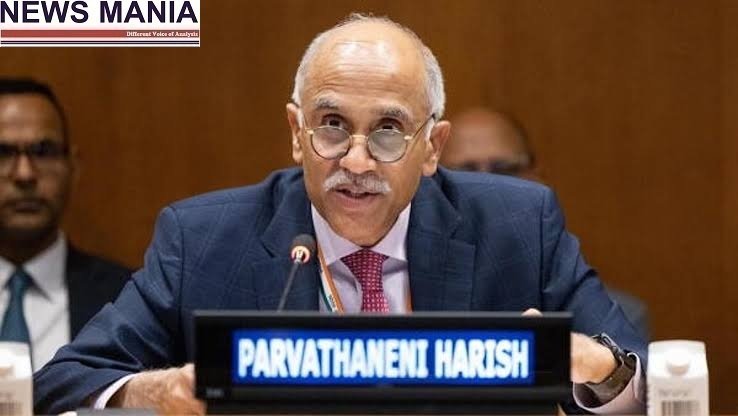
India’s Permanent Representative to the United Nations, Harish Parvathaneni, made the remarks during a discussion on the consequences of the Russia-Ukraine conflict, stressing that the impact of wars extends far beyond the countries directly involved. He pointed out that disruptions to food, energy, fertiliser and transportation networks often affect poorer economies more severely, leaving millions exposed to inflation, food shortages and economic instability.
Invoking the Bengal famine, which claimed the lives of more than three million people in 1943, Parvathaneni underscored the historical consequences of conflict-related disruptions and policy decisions. He argued that the international community must recognise that the costs of wars are not distributed equally and that developing nations frequently bear a disproportionate share of the burden.
India also highlighted the wider repercussions of the Russia-Ukraine war on global food security, agricultural trade and energy markets. The conflict has disrupted supply chains and contributed to volatility in commodity prices, particularly affecting countries dependent on imported grain, fuel and fertilisers. Parvathaneni reiterated India’s position that the conflict should be resolved through dialogue and diplomacy, recalling Prime Minister Narendra Modi’s emphasis on the need to move beyond prolonged wars. India has consistently called for peaceful negotiations and maintained that diplomatic engagement remains essential to addressing the conflict’s broader consequences.
The Indian representative also urged the Security Council to prioritise the protection of civilian infrastructure, humanitarian access and freedom of navigation. Concerns over attacks on merchant vessels, disruptions to shipping routes and risks faced by seafarers have heightened fears about the potential impact on international trade and food distribution.
India highlighted the significance of the Black Sea region in global agricultural supply chains, noting that India and countries in the region collectively contribute substantially to worldwide cereal production. Russia and Ukraine remain major suppliers of wheat, maize and barley to international markets, making disruptions to their exports particularly consequential for food-importing nations.
The country also expressed concern over attacks on commercial vessels and the dangers faced by maritime personnel. Indian sailors have been among those affected by incidents in the Black Sea, prompting calls for stronger protections for civilian shipping and crews. New Delhi urged the global community to work towards peace, protect civilian interests and ensure that vulnerable populations are not left to bear the disproportionate costs of warfare.