State Legislators Leadership Programme concludes with Roadmap for a flagship Leadership Academy for Legislators in India
By Malthus Sangma, Secretary, Legislative Assembly, Meghalaya / 20th November 2026

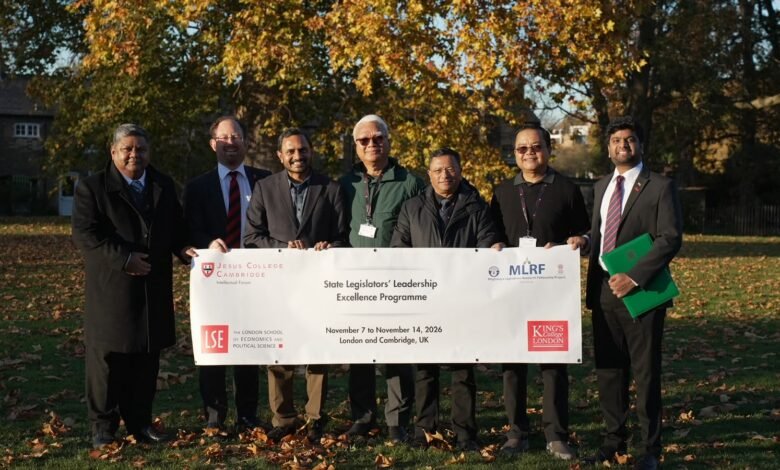
MLRF with Intellectual Forum Jesus College, Cambridge, King’s College London and LSE advances legislative leadership, parliamentary reform and long-term institutional capacity.Meghalaya Assembly–Cambridge MoU sets the direction for a flagship academy; proposed Task Force under Speaker Thomas Sangma to guide its development under the leadership of hon. CM Conrad Sangma.
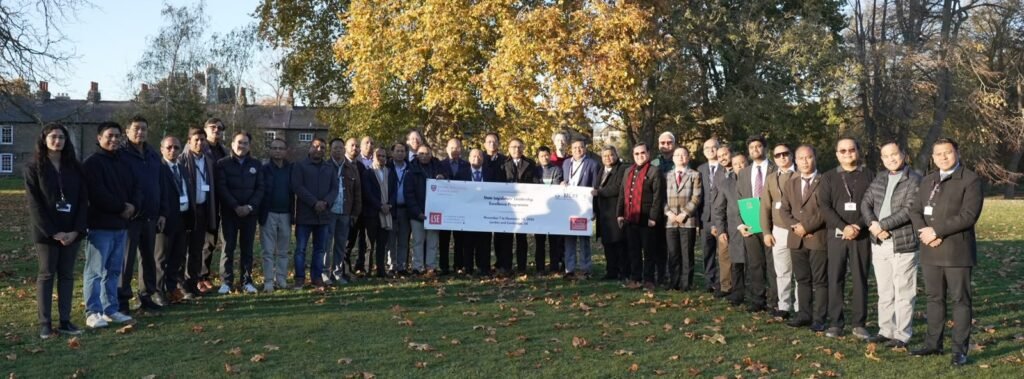
The State Legislators Leadership Programme, organised by the MLRF Project in partnership with the Intellectual Forum, Jesus College, Cambridge; King’s India Institute, King’s College London; and LSE Consulting, concluded following a week of learning, policy engagement and parliamentary exposure from 7–14 November 2026.Bringing together classroom tutorials, policy sessions, simulations and direct engagement with parliamentary practice, the programme advanced an agenda for strengthening legislative leadership and building the institutional capabilities needed to address increasingly complex public policy challenges.
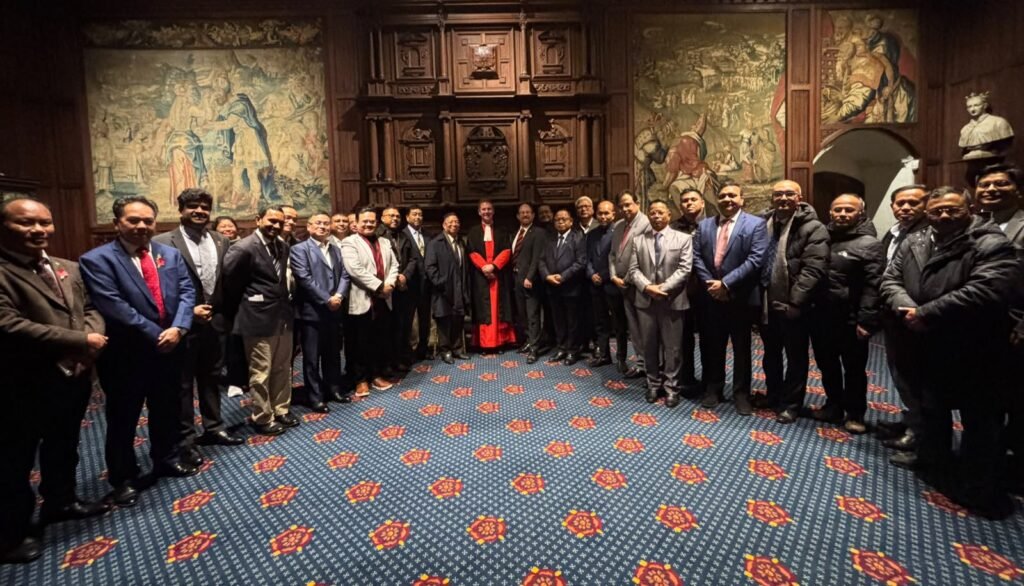
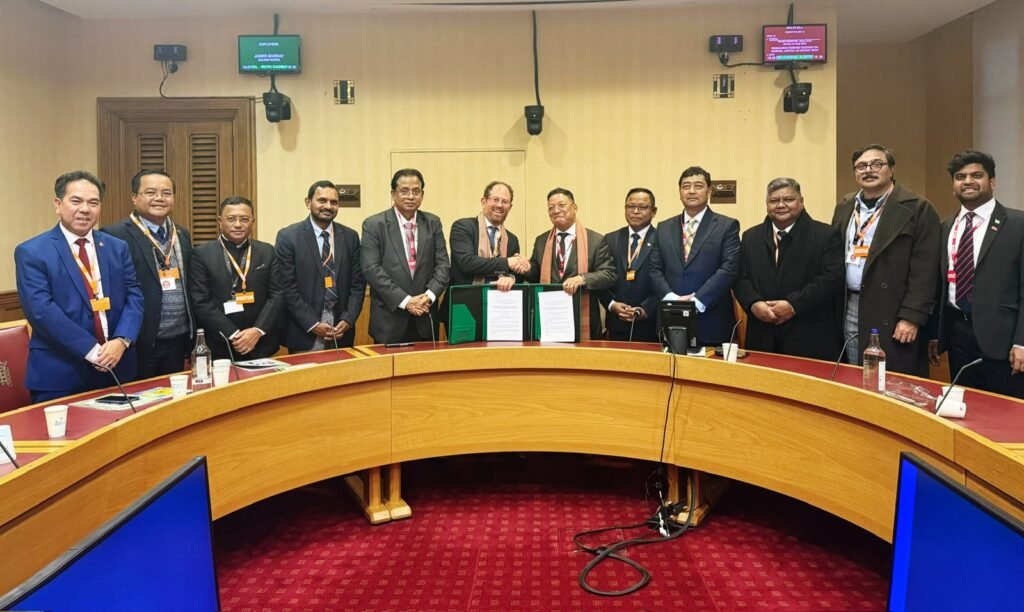
A defining outcome was the signing of a Memorandum of Understanding between the Meghalaya Assembly and Cambridge, setting the direction for a maiden flagship initiative to develop an Academy for Legislators in India in close partnership with Cambridge. Envisaged as the State Legislators Leadership Academy (SLLA), the proposed institution would carry the programme’s learning into a sustained framework for legislative education, research, professional support and collaboration across State Assemblies.The programme also featured a visit to the Ambedkar House in London to revisit the preamble and the constitutional values, the Houses of Parliament, observation of a live session of Prime Minister’s Questions (PMQs), a roundtable with CPA on legislative and parliamentary reforms, and an ECD mission Policy Dialogue. Together, these engagements connected structured learning with practical consideration of legislative scrutiny, executive accountability, parliamentary procedure and institutional reform.
Connecting Leadership Development with Parliamentary Practice
The State Legislators Leadership Programme was designed around the understanding that effective legislative leadership requires more than familiarity with parliamentary rules. It also calls for the ability to assess evidence, engage with competing policy choices, scrutinise legislation, represent constituency priorities and work constructively across political differences.
Classroom tutorials and policy sessions provided space for examining these responsibilities, while simulations introduced an applied dimension to the learning experience. This combination placed emphasis on the relationship between knowledge and practice: how legislators frame questions, assess proposals, deliberate on public priorities and translate policy intentions into meaningful legislative work.
The programme’s international academic and policy partnerships provided a setting for comparative learning without losing sight of the responsibilities and circumstances of Indian State Legislatures. Its wider purpose was to encourage reflection on how relevant ideas and institutional practices could be adapted to support stronger legislative performance in India.
Parliamentary Exposure and Dialogue on Reform
The visit to the Houses of Parliament was a major highlight, offering participants an opportunity to connect their learning with the working environment of a legislature.Witnessing a live session of PMQs brought the relationship between government and parliamentary scrutiny into immediate focus. Within the programme, the visit provided a practical reference point for considering the importance of preparation, questioning, responsiveness and accountability in legislative proceedings.
A roundtable discussion with CPA focused on legislative and parliamentary reforms, creating space to consider institutional strengthening alongside the development of individual legislators. The engagement placed reform within the broader context of parliamentary effectiveness and the support systems that enable elected representatives to discharge their responsibilities.The ECD mission Policy Dialogue added a further platform for policy exchange, complementing the tutorials, simulations and parliamentary visit. These different formats gave the programme a connected structure: learning concepts, examining policy challenges, observing parliamentary practice and considering pathways for institutional development.
MoU Establishes a Direction for Sustained Legislative Capacity Building
The signing of the Meghalaya Assembly–Cambridge MoU marked a significant step towards translating a time-bound leadership programme into a longer-term institutional initiative.The proposed Academy would seek to create a sustained platform for legislators and the professional teams that support them. Its ambition is to make legislative learning continuous rather than episodic, connecting leadership development with research, practical training, comparative exposure and constituency-level needs.
At the heart of this vision is a multi-partisan, non-political and future-oriented institution dedicated to strengthening the legislative branch of democracy. The Academy would be intended to serve legislators across party lines, with its work centred on public policy, institutional capability and effective representation rather than partisan advocacy.While emerging through the Meghalaya Assembly’s initiative, the Academy would aspire to act as a catalyst for engagement among State Assemblies across India. Its development would provide an opportunity to build a shared platform for learning while recognising the distinct priorities, contexts and institutional requirements of different legislatures.
Proposed Task Force under Speaker Thomas Sangma
As an initial step, a Task Force is proposed under the leadership of the Speaker of the Meghalaya Legislative Assembly, Thomas Sangma, with delegated support from officials of the MLRF Project.
The Task Force would guide the Academy’s development, helping translate its founding vision into a practical institutional and implementation framework. Its proposed agenda would include:- Promoting the SLLA and building engagement around its purpose among legislatures, academic institutions and relevant partners.
– Designing the curriculum and teaching approaches to connect legislative knowledge with practical skills, policy analysis and applied learning.
– Developing capacity-building programmes responsive to the responsibilities of legislators and their support teams.
– Planning experiential visits to other parliaments and legislatures, linking comparative exposure with structured reflection and locally relevant learning.
– Supporting capacity for effective police legislation, including informed consideration of legislative proposals and their implications.
– Advancing constituency-level research and education, helping connect legislative work with local priorities and evidence.
– Developing a framework to recruit, train and deploy Legislative Secretaries to support respective Members of the Legislative Assembly.
The Task Force would provide an organisational focus for the next stage of the initiative, bringing together programme development, partnership coordination and implementation planning.
Legislative Secretaries at the Centre of the Academy’s Mission
A central priority of the proposed Academy would be the recruitment, training and deployment of Legislative Secretaries to respective MLAs.This component recognises the importance of sustained professional support alongside leadership development for elected representatives. The proposed model would seek to connect trained personnel with the day-to-day requirements of legislative and constituency work, making the Academy’s contribution practical and ongoing.
The framework developed by the Task Force would need to define the responsibilities, competencies, training requirements and deployment arrangements for these Legislative Secretaries. Their envisaged contribution would align with the Academy’s wider focus on legislative research, policy understanding, preparation and constituency-level evidence.
By linking the development of legislators with the preparation of their support teams, the Academy would aim to build institutional capability rather than rely solely on individual training interventions.
A Multi-Partisan Platform for the Future of State Legislatures
The programme’s conclusion establishes a forward-looking agenda: to move from a successful international learning experience towards a durable institution for legislative development in India.The proposed Academy would bring together several mutually reinforcing elements—leadership education, policy learning, research, experiential exposure and professional legislative support. Its value would lie in connecting these elements within a coherent framework that remains responsive to the needs of elected representatives and the communities they serve.Its multi-partisan character would be fundamental. By creating space for learning across political differences, the Academy would seek to strengthen the shared institutional responsibilities of legislators while respecting the diversity of democratic debate.For the MLRF Project and its programme partners, the State Legislators Leadership Programme has provided a foundation for this next phase. The tutorials, policy sessions, simulations, parliamentary engagement and reform discussions culminated not only in a completed programme, but in a proposed pathway towards sustained legislative capacity building.
With the MoU setting the direction and the proposed Task Force providing a mechanism to take the work forward, the initiative now looks towards developing an Academy capable of supporting informed lawmaking, effective representation and stronger legislative institutions across India.