Earth May Not Be the Best Planet for Life, Scientists Suggest More Habitable Worlds Could Exist
News Mania Desk/ Piyal Chatterjee/ 16th October 2026

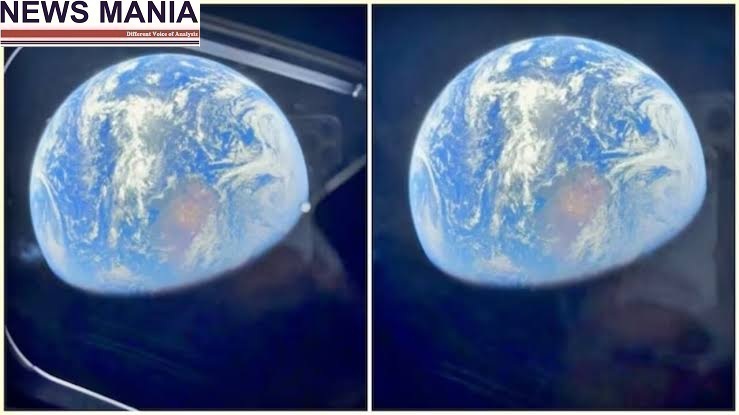
Scientists are exploring the possibility that Earth may not be the most suitable planet for supporting life, suggesting that other worlds in the universe could offer more favourable conditions. The concept of “superhabitable planets” has gained attention among researchers studying how planetary characteristics, stellar environments and atmospheric conditions influence the development of life.
According to scientific research, some planets could provide better conditions for life than Earth if they possess the right combination of size, temperature, atmosphere and access to energy. Researchers suggest that planets slightly larger than Earth, with greater mass, might retain their atmospheres more effectively and maintain stable environments for extended periods.
The type of star a planet orbits could also play an important role in determining its habitability. Scientists have identified K-dwarf stars, which are smaller and cooler than the Sun, as potentially promising candidates. These stars consume their fuel more slowly and can remain stable for billions of years longer than the Sun, potentially providing a longer window for life to emerge and evolve.
Earth itself may not remain habitable indefinitely. As the Sun gradually becomes brighter, temperatures on the planet are expected to rise, eventually making conditions unsuitable for complex life. Some estimates suggest this could occur in approximately 500 million years, although the timeline depends on several environmental and astronomical factors.
In an experiment examining how plants respond to different stellar environments, researcher Iva Vilovic grew garden cress under artificial lighting designed to simulate the light emitted by a K-dwarf star. The plants displayed faster and taller growth under the simulated conditions than under light representing the Sun. However, the findings do not establish that planets orbiting such stars are necessarily more habitable.
Future space missions could help scientists identify potentially superhabitable planets. The European Space Agency’s PLATO mission is expected to investigate planets orbiting distant stars, while the James Webb Space Telescope can examine the atmospheres of selected exoplanets. Scientists stress that no world beyond Earth has yet been confirmed to support life. The search for superhabitable planets remains an important avenue for understanding whether life could thrive elsewhere in the universe.