
Antarctic Sea Ice Records Third-Lowest Annual Maximum in 2026, NASA Reports
News Mania Desk/ Piyal Chatterjee/ 13th October 2026

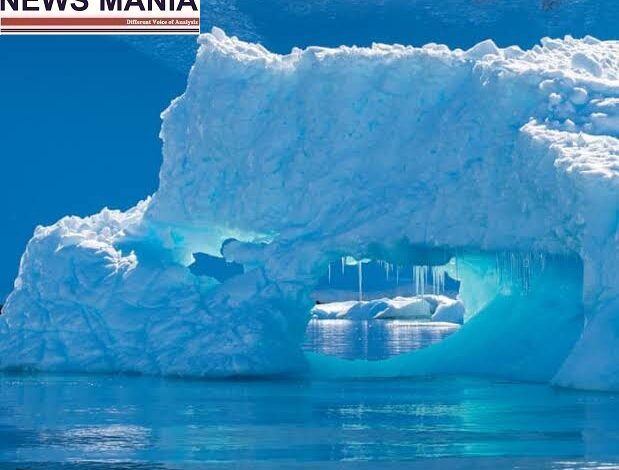
Antarctic sea ice reached its annual maximum for 2026 on September 14, covering approximately 17.59 million square kilometres, or 6.79 million square miles, according to NASA’s Earth Observatory. The extent ranks as the third-lowest annual maximum recorded since satellite monitoring began, highlighting continuing changes in the polar region.
Sea ice around Antarctica expands during the Southern Hemisphere’s winter and retreats during the summer. The annual sea ice maximum marks the point at which the ice cover reaches its greatest extent before seasonal melting begins. Scientists monitor this cycle to understand changes in the Antarctic environment and their implications for the global climate system.
Satellite observations have revealed significant variations in Antarctic sea ice over recent decades. Between 1979 and 2014, the region experienced a modest overall increase in sea ice extent, although conditions varied from year to year. That pattern changed after 2015, when Antarctic sea ice levels began declining sharply, with particularly substantial reductions recorded from 2016 onwards.
The recent changes have attracted scientific attention because Antarctic sea ice plays an important role in regulating the Earth’s climate. Ice reflects a portion of incoming sunlight back into space, helping limit the amount of solar energy absorbed by the ocean. When sea ice retreats, darker ocean water is exposed, potentially allowing more heat to be absorbed.
Researchers use satellite monitoring and instruments equipped with passive microwave sensors to measure sea ice extent. These instruments can monitor the polar regions even when clouds obscure the surface, allowing scientists to track seasonal changes and compare observations across several decades.
However, scientists are still investigating the reasons behind the recent decline. Researchers are examining the influence of ocean conditions, atmospheric circulation and natural climate variability to determine whether the changes indicate a lasting shift in Antarctic sea ice patterns. The 2026 Antarctic sea ice maximum adds another important data point to the long-term record. Continued satellite monitoring will help scientists establish whether the recent declines persist and improve understanding of how Antarctica responds to a changing climate.