2026 is next year, according to Google’s AI overview. Elon Musk responds
News Mania Desk/Piyal Chatterjee/7th January 2026


After Google’s AI Overview went rogue once more and forgot the year, Elon Musk responded. A snapshot of a Google search asking, “Is it 2027 next year?” was posted by a user on X (previously Twitter). The AI Overview responded by saying, “No, 2027 is not next year.” Next year is 2026.
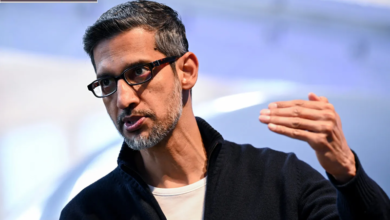
Responding to the post, Musk wrote, “Room for improvement”
It’s interesting that Musk, who frequently highlights Grok AI’s new features, neglected to link consumers to his AI chatbot. This could be due to the fact that Grok AI itself is no stranger to controversy; in the past, it referred to Musk and his former boss, Donald Trump, as the “biggest threat to America.”
More recently, it has come under fire for producing sexually explicit deepfakes involving women and children.However, Google’s AI Overview has previously produced false information. Soon after its debut, the function sparked controversy by advising users to eat rocks for vitamins or add “glue” to pizza.
The errors with AI Overview appeared to become better as Google worked on Gemini, but the chatbot caused controversy once more when it claimed that “Call of Duty: Black Ops 7” was a fraud.
In this case, Google appears to have disabled the AI Overview for the query “is is 2027 next year,” but the AI answer, which says “No, 2026 is next year,” appears when the word “AI Overview” is added after the query. 2025 is the current year. In contrast, the company’s AI Mode, supported by Gemini 3, does not produce the same errors when the same query or comparable variations of it is asked.
Notably, AI Mode continues to provide false health information that puts people at risk, according to a recent investigation. According to reports, the AI went on to incorrectly counsel people with pancreatic cancer to stay away from high-fat foods, which is completely contrary to the advice given by specialists who claim that this could raise the likelihood of patients dying from the illness.
In a different instance, the AI gave “bogus information about liver function tests which could lead to people having serious liver disease.” Additionally, it offered “completely wrong” information regarding cancer screenings for women, which is said to have the potential to cause people to discount real symptoms.