India Mulls Ganga Water Treaty Review Amid Strained Ties with Bangladesh
News Mania Desk / Piyal Chatterjee / 25th June 2025

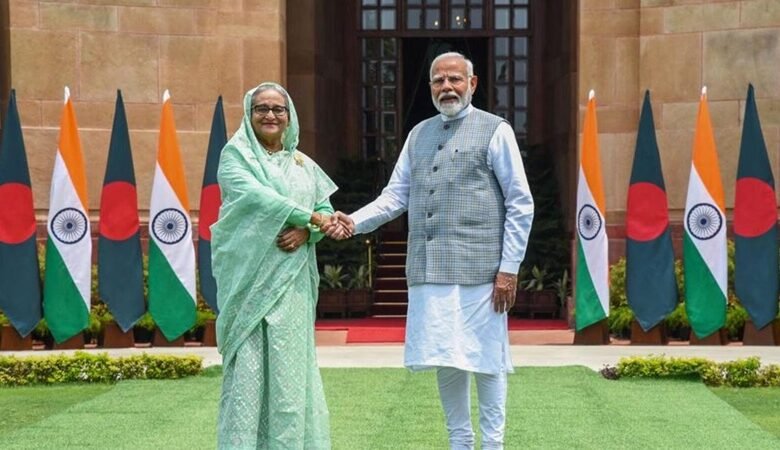
In a significant diplomatic move, the Indian government is preparing to review the 1996 Ganga Water Treaty with Bangladesh, citing changing geopolitical dynamics and increasing domestic water demands. The development follows India’s recent suspension of the Indus Waters Treaty with Pakistan and comes as relations with Dhaka become increasingly complex.
The current treaty, set to expire in 2026, outlines the sharing of Ganga waters at the Farakka Barrage during the lean season. When water availability drops below 70,000 cusecs, both countries split the water equally. If the flow is between 70,000 and 75,000 cusecs, Bangladesh receives 35,000 cusecs, and the remainder goes to India. When the flow exceeds 75,000 cusecs, India is entitled to 40,000 cusecs. However, concerns from Indian states like West Bengal and Bihar over reduced availability during crucial agricultural periods have prompted calls for a renegotiation.
Central government officials are reportedly advocating for a revised, time-bound agreement—possibly spanning 10 to 15 years—to allow periodic reassessment in light of climate change, sedimentation, and shifting national priorities. Technical teams from both countries met in Kolkata in March under the Joint Rivers Commission to begin preliminary discussions.
Tensions between the two countries have recently intensified due to political statements from Bangladesh’s interim leader, Muhammad Yunus. Appointed after widespread student protests in 2024, Yunus has been accused by Indian commentators of promoting Chinese involvement in the Northeast region, prompting calls within India to re-evaluate not only water-sharing but also transit privileges extended to Bangladesh.
Bangladesh, deeply reliant on the Ganga’s lean-season flow, has expressed alarm over the possibility of receiving less water. Dhaka fears that reduced inflow could harm agriculture, fisheries, and drinking water supply in the country’s western districts.
With growing strategic concerns and environmental unpredictability surrounding shared water resources, India’s push to revisit the Ganga Treaty underscores a broader trend of recalibrating transboundary river diplomacy. As both nations navigate internal political pressures and ecological uncertainty, the outcome of this review could reshape regional cooperation on water security for years to come.