‘Japanese First’ party emerges as election force with tough immigration talk
News Mania Desk / Piyal Chatterjee / 21st July 2025

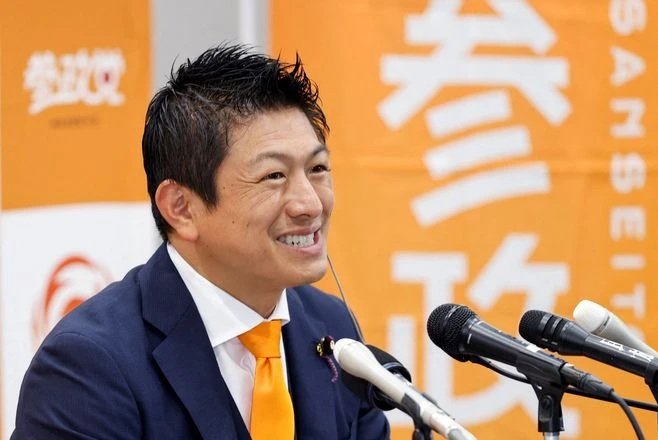
The fringe far-right Sanseito party emerged as a significant victor in Japan’s upper house election on Sunday, garnering support through alerts about a “silent invasion” of immigrants, alongside promises for tax reductions and increased welfare spending.
Emerging on YouTube amid the COVID-19 pandemic by propagating conspiracy theories regarding vaccinations and a global elite cabal, the party entered mainstream politics with its “Japanese First” campaign. It secured 14 seats, increasing its representation from the single lawmaker obtained in the 248-seat legislature three years prior. It contains merely three seats in the more powerful lower chamber.
“The phrase Japanese First was meant to express rebuilding Japanese people’s livelihoods by resisting globalism. I am not saying that we should completely ban foreigners or that every foreigner should get out of Japan,” Sohei Kamiya, the party’s 47-year-old leader, said in an interview with local broadcaster Nippon Television after the election.
Prime Minister Shigeru Ishiba’s Liberal Democratic Party and its coalition partner Komeito lost their majority in the upper house, leaving them further beholden to opposition support following a lower house defeat in October.
“Sanseito has become the talk of the town, and particularly here in America, because of the whole populist and anti-foreign sentiment. It’s more of a weakness of the LDP and Ishiba than anything else,” said Joshua Walker, head of the U.S. non-profit Japan Society.
In polling ahead of Sunday’s election, 29% of voters told NHK that social security and a declining birthrate were their biggest concern. A total of 28% said they worried about rising rice prices, which have doubled in the past year. Immigration was in joint fifth place with 7% of respondents pointing to it.
“We were criticized as being xenophobic and discriminatory. The public came to understand that the media was wrong and Sanseito was right,” Kamiya said.
Kamiya’s message resonated with voters unhappy about a sluggish economy and a currency that has attracted tourists in unprecedented numbers lately, which has further increased costs that Japanese citizens struggle to manage, according to political analysts. Japan’s rapidly aging population also observed foreign-born residents reaching a record of around 3.8 million last year, although this amounts to only 3% of the entire population, a small share compared to similar figures in the U.S. and Europe. Kamiya, who previously worked as a supermarket manager and English teacher, mentioned to Reuters before the election that he was inspired by U.S. President Donald Trump’s “audacious political style.”
He has made comparisons with Germany’s AfD and Reform UK, although right-wing populist policies have not yet established themselves in Japan as they have in Europe and the U.S.
After the election, Kamiya stated his intention to emulate Europe’s rising populist parties by forming coalitions with other smaller parties instead of collaborating with an LDP government, which has dominated Japan’s postwar era.