China Supports KMT as Taiwan Faces Unprecedented Recall Vote Targeting Opposition Lawmakers
News Mania Desk / Piyal Chatterjee / 22nd July 2025

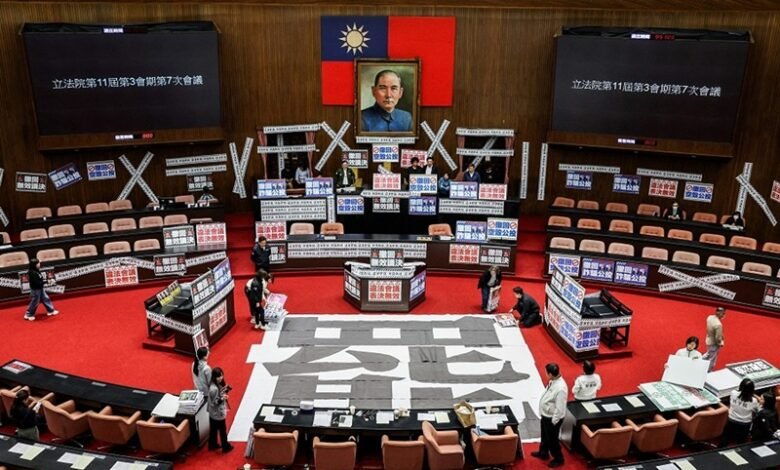
China has publicly backed Taiwan’s main opposition party, the Kuomintang (KMT), as the island prepares for an unprecedented mass recall vote targeting 24 opposition lawmakers. Scheduled for July 26, the recall campaign could significantly alter Taiwan’s legislative balance and has drawn sharp reactions across the political spectrum.
The recall movement, led by civic groups and backed by the ruling Democratic Progressive Party (DPP), accuses KMT legislators of obstructing democratic governance, including key budget proposals for national defense. The DPP, which lost its parliamentary majority despite winning the presidency earlier this year, views the recall as a democratic corrective measure. However, critics have labelled it politically motivated.
Beijing has strongly condemned the recall efforts. The Taiwan Affairs Office of China described the campaign as a form of “green terror” and accused President Lai Ching‑te’s administration of eroding democratic values under the guise of popular will. Spokesperson Zhu Fenglian accused Lai of “engaging in dictatorship under the guise of democracy,” calling the recall a scheme to silence opposition voices.
Despite this support, the KMT has distanced itself from Beijing’s remarks. Party spokesperson Crystal Yang asserted that the recall issue is purely a domestic affair and has “nothing to do with the mainland.” She emphasized that the party was focused on addressing the needs of the Taiwanese people.
DPP legislator Wu Szu-yao warned that China’s public alignment with the KMT could be perceived as foreign interference, potentially undermining Taiwan’s sovereignty. “Beijing is supplying political ammunition to the opposition,” Wu stated.
For a successful recall, each vote must not only pass a majority threshold but also meet a 25% minimum voter turnout in the respective district. Should a significant number of KMT lawmakers be removed, new by-elections will be required within three months, potentially shifting legislative control back to the DPP.
This development intensifies Taiwan’s political uncertainty and highlights the broader geopolitical implications of Beijing’s involvement, as the island continues to navigate the delicate balance between domestic politics and cross-strait tensions.