
RANJIT KUMAR SINHA
The writer is a renowned Delhi based journalist specialised in legal matters.
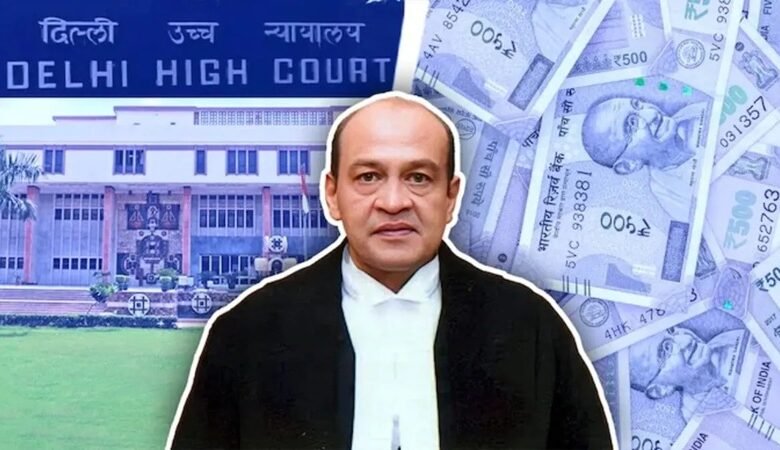
New Delhi – 11th August 2025- The process of removing the judge in the cash-at-home case has moved forward, with Lok Sabha Speaker Om Birla on Tuesday announcing the formation of a three-member inquiry committee to investigate allegations against Justice Yashwant Varma of the Allahabad High Court.
The allegations against him stem from a fire at his official residence in Delhi in March 2025, where burnt wads of currency notes were discovered in a storeroom.
The move to constitute a committee to investigate the allegations against Justice Varma was made after accepting a motion for his removal signed by 146 MPs from both the ruling and opposition parties.
The committee for Justice Varma’s case consists of: Justice Aravind Kumar, a Supreme Court Judge, Justice Manindra Mohan Shrivastava, Chief Justice of the Madras High Court, and B.V. Acharya, a senior advocate of the Karnataka High Court.
This committee is tasked with reviewing the evidence, cross-examining witnesses, and submitting a report to Parliament. The motion for Justice Varma’s removal will remain pending until this report is received.
The motion to remove Justice Varma is an extraordinary step in Indian parliamentary history.
The process of a judge’s removal in India is governed by the Judges (Inquiry) Act, 1968, and requires a motion to be supported by a minimum of 100 members in the Lok Sabha or 50 in the Rajya Sabha. The Speaker or Chairman of the respective house then decides whether to admit the motion. Upon admission, a three-member committee is constituted to investigate the charges. This committee typically includes a Supreme Court judge, a Chief Justice of a High Court, and a distinguished jurist.
The “cash-at-home” scandal began on March 14, 2025, when a fire broke out at Justice Varma’s official residence in New Delhi. Firefighters and police discovered a significant amount of burnt and partially burnt cash in a storeroom. Justice Varma, who was a Delhi High Court judge at the time, denied any knowledge of the cash, claiming the storeroom was accessible to others.
Following the incident, the then-Chief Justice of India, Sanjiv Khanna, initiated an in-house inquiry. This inquiry concluded that the allegations had “sufficient substance” and found Justice Varma guilty of misconduct.
The report recommended that Parliament initiate proceedings for his removal. The Supreme Court recently upheld the validity of this in-house inquiry, dismissing Justice Varma’s plea to invalidate the report.
The apex court’s ruling stated that the in-house procedure was “scrupulously followed” and that the judge’s conduct “does not inspire confidence.” The Supreme Court also noted that the Chief Justice of India’s role is not a “mere post office” and that they must protect the integrity of the judiciary.
Lok Sabha Speaker Om Birla emphasized the importance of parliamentary unity on this issue, stating that the House must send a clear message of “zero-tolerance policy towards corruption in public life.” The bipartisan support for the motion, with signatures from MPs from various political parties, highlights a rare moment of consensus on an issue of judicial accountability.
The committee’s report will be crucial. If it finds the judge guilty, the motion for his removal will be taken up for a vote in both houses of Parliament. A two-thirds majority in each house is required to pass the motion, after which it is sent to the President for the final order of removal. This process, if completed, would be a landmark event for India’s judiciary and its system of checks and balances.