New NCERT module on Partition horrors partly blames Congress
News Mania Desk / Piyal Chatterjee / 16th August 2025

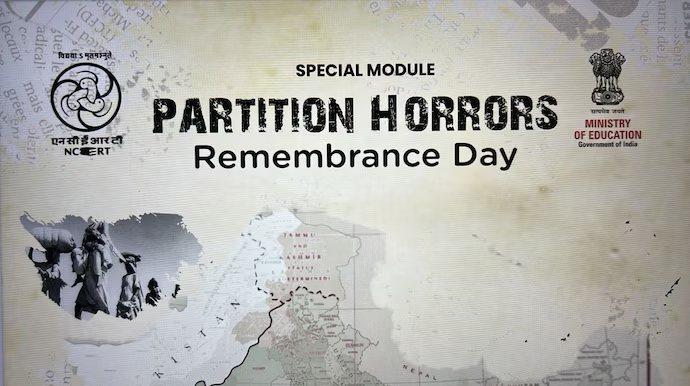
A new special module by the National Council of Education Research and Training (NCERT) has blamed three figures as responsible for the Partition of India, including Muhammad Ali Jinnah, the Congress leadership, and then Viceroy Lord Mountbatten. The module, created for ‘Partition Horrors Remembrance Day’, observed every year on August 14, states Jinnah, who had been propagating the partition; the Congress, which accepted the partition; and Mountbatten, who had been sent to implement the partition.”
It also notes that Partition turned Kashmir into a new security problem for the country, adding: “Since then, one of our neighbouring countries has been using this problem to put pressure on India in different ways.”
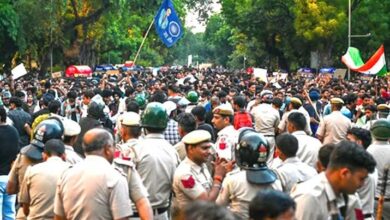
It has ignited a controversy with Congress spokesperson Pawan Khera demanding the module be destroyed as it was not truthful. Distinct versions have been created for Classes 6-8 and Classes 9-12, apart from the standard textbooks. The text discusses the 1940 Lahore Resolution, in which Muhammad Ali Jinnah asserted that Hindus and Muslims belonged to “two distinct villages, philosophies, social customs, and literatures.”
The module contends that the British aimed to maintain India’s unity by proposing dominion status, but Congress rejected this offer . Ultimately, Jawaharlal Nehru and Patel agreed to the partition. Gandhi subsequently influenced the Congress Working Committee on June 14, 1947, to consent to partition as well
The Congress has hit out at NCERT’s interpretation. Party spokesperson Pawan Khera said: “Burn this document as it doesn’t tell the truth. Partition happened due to nexus between Hindu Mahasabha and Muslim League.”
“RSS is danger to this nation. Idea of partition was first propagated by Hindu Mahasabha in 1938. It was repeated by Jinnah in 1940,” he said in a press conference.
The clash over NCERT’s partition module has now turned into a fresh political flashpoint, with competing narratives about who was responsible for India’s division, and how India’s history should be taught in classrooms.