
A Tradition of Bravery, Genuineness, and Compassion: Shyam Benegal
News Mania Desk / Piyal Chatterjee / 20th August 2025

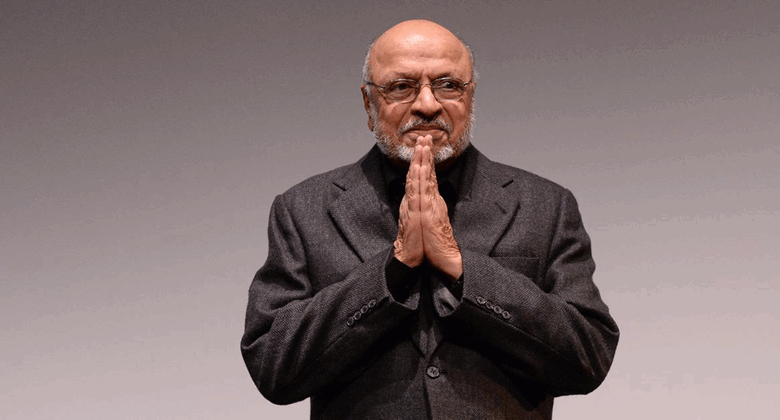
In addition to being a filmmaker, Shyam Benegal was a storyteller who revolutionized Indian cinema. Shyam Benegal, a legendary personality in Indian cinema, died on December 23, 2024, at the age of 90. His daughter claims that he passed away from a chronic renal illness that he had been fighting for years. Indian cinema has lost a brilliant filmmaker who gave voice to numerous neglected stories with his demise.
Benegal, who was born in Hyderabad, Telangana, on December 14, 1934, fell in love with storytelling early on. He used a camera that his father had given him to make his first short film, Chuttiyon Mein Mauj-Maza, when he was twelve years old.
A tiny preview of the extraordinary career that awaited him was provided by this experiment. It would be a journey that combined his artistic genius with his interest in the human condition. Benegal started his career as a commercial director in the advertising industry. He was able to refine his abilities in this medium prior to deciding to follow his passion and attempt directing big pictures. Shabana Azmi, who would later become one of the most admired actors in Indian cinema, was first seen in his debut film, Ankur (1973), which explored caste and gender relations in rural India. Benegal’s future as a powerful director was hinted at by the film’s uncompromising honesty.
His subsequent works quickly followed Ankur and solidified his reputation. In Nishant (1975), he examined the tenacity of the people and the misuse of authority by feudal lords. Manthan (1976), India’s first crowdfunded feature film, came next. To assist promote the tale of a milk cooperative and the strength of grassroots collective action, about 500,000 farmers each paid two Indian rupees. The 1977 film Bhumika depicted a woman’s quest for love, ambition, and self-discovery in all its rawness. With sensitive and genuine depictions of marginalized populations, each film addressed the social and political realities of India after independence.
He directed Junoon in 1978, which used a tragic romance to depict the chaos of the 1857 uprising. Mandi (1983), which was set in Hyderabad, South India, revealed the hypocrisies surrounding morality and sex trade. The Mahabharata was reinterpreted by Kalyug (1981) as the struggle for control within a corporate family. People were central to Benegal’s stories; they were flawed, nuanced, and incredibly human.
In addition to their daring narratives, his films from the 1970s were groundbreaking because they stood in stark contrast to the escapism that characterized mainstream Hindi cinema. He concentrated on true tales, frequently involving underprivileged groups, with an emphasis on women’s lives and hardships. Actors like Shabana Azmi, Om Puri, and Naseeruddin Shah became icons of what were then commonly described to as “art films” because of his refusal to sugarcoat these portrayals, which resonated with viewers both in India and elsewhere.
Russian pioneers Sergei Eisenstein and Vsevolod Pudovkin taught Benegal the value of storytelling and socially sensitive subjects. He was inspired to investigate socioeconomic realities by the renowned Indian director Satyajit Ray, about whom Benegal produced a documentary, which enabled him to develop his own distinct voice.
For years, he produced public service and industrial documentaries in which he examined the socioeconomic intricacies of his nation. He directed movies on practically every subject, from the production of steel to the artificial insemination of cattle. He frequently traveled to rural India for these projects, where he developed a deep understanding of the struggles that regular people confront. He frequently talked about using cinema to record and comprehend the social shifts taking place in the world around him.
On New Year’s Day in 2025, India’s public broadcaster Doordarshan screened Manthan in remembrance of his legacy. Several decades after its publication, the tribute acted as a reminder of his work’s capacity to provoke discussions about humanity and justice. According to renowned Bollywood filmmaker Sanjay Leela Bhansali, Benegal’s works are “a masterclass in courage and originality.” They encouraged people to value genuine storytelling over conventional and cliched narratives.
Benegal earned 18 National Film Awards over his career in various categories, including best film, script, and direction. He was awarded India’s highest honor in film, the Dadasaheb Phalke Award in 2005, the Padma Shri in 1976, and the Padma Bhushan in 1991.
Based on Jawaharlal Nehru’s book The Discovery of India, Benegal also directed the critically acclaimed television series Bharat Ek Khoj. Younger Indian filmmakers like Rakeysh Omprakash Mehra, Ashutosh Gowariker, and Mira Nair were also greatly impacted by him. All of them have discussed how his work influenced their ideas and how he guided them, pushing them to try new things.
A legacy of bravery, sincerity, and empathy is left by Shyam Benegal. His movies left a lasting impression on you long after the credits had rolled. They served as a reminder of the transformative potential of storytelling.