
Do India’s Laws Truly Protect Queer People from Discrimination?
New Mania Desk / Piyal Chatterjee / 26th August 2025

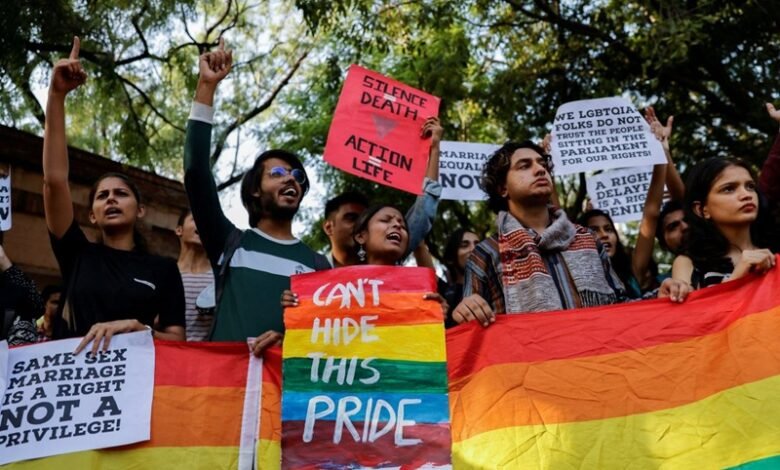
In recent years, India has witnessed important strides in queer rights, from the decriminalisation of same-sex relations in 2018 to the recognition of transgender persons as a distinct gender. Yet, for millions of queer Indians, the reality of daily life continues to be shaped by discrimination, exclusion, and lack of legal safeguards. While constitutional promises of equality and dignity exist, their translation into effective protection against prejudice—particularly in private and social domains—remains incomplete.
At the heart of India’s equality framework lies Article 15 of the Constitution, which prohibits discrimination based on religion, race, caste, sex, or place of birth. While the Supreme Court has read “sex” to include sexual orientation and gender identity, Article 15 applies only to the state and its organs. This means private acts of discrimination—whether by landlords refusing to rent to same-sex couples, banks denying joint accounts, or employers sidelining queer workers—often fall outside constitutional scrutiny. For a community whose daily battles largely occur in these private spaces, the limits of Article 15 leave a gaping hole in protection.
Evidence suggests that this gap has tangible consequences. A 2018 study by the National Human Rights Commission (NHRC) revealed stark figures: 98% of transgender persons reported facing discrimination from peers, neighbours, or even family members; 92% had experienced workplace exclusion; and 62% faced ridicule in educational institutions. Beyond statistics, countless stories of queer individuals struggling to access housing or being forced to hide their identities in professional spaces reflect a society where stigma remains deeply entrenched.
Discrimination also extends indirectly through laws and policies that, while neutral on the surface, exclude queer people in practice. For instance, India’s adoption framework allows only married couples or single individuals to adopt jointly. Since same-sex marriage is not legally recognised, queer couples remain barred from the possibility of building families together through adoption. Such exclusions highlight how law can reinforce marginalisation even without explicit bans.
Despite these challenges, Indian courts have played a crucial role in expanding queer rights. The Supreme Court’s 2018 judgment in Navtej Singh Johar v. Union of India struck down Section 377 of the Indian Penal Code, decriminalising consensual same-sex relations. In doing so, the Court affirmed that sexual orientation is an integral aspect of identity and that discrimination on this basis violates constitutional guarantees.
Earlier, in 2014, the NALSA judgment had recognised transgender persons as a “third gender,” granting them the right to self-identify and directing governments to provide reservations in education and employment. These rulings marked watershed moments, moving queer rights from the margins into the constitutional mainstream.
More recently, in Supriyo v. Union of India (2023), the Supreme Court was asked to legalise same-sex marriage. The Court stopped short of doing so, leaving marriage laws unchanged. Yet, the judgment was not devoid of progress. Several judges acknowledged the real and pervasive discrimination faced by queer people and underlined the urgent need for state recognition of queer relationships. Importantly, the case prompted civil society groups such as the Vidhi Centre for Legal Policy and the Keshav Suri Foundation to submit the “Supriyo recommendations”—a detailed set of policy suggestions aimed at making Indian laws more inclusive.
In another encouraging development, the Madras High Court in 2025 recognised the rights of queer individuals to form “chosen families.” Moving beyond narrow definitions of family based on blood, marriage, or adoption, the Court extended constitutional protection to familial bonds rooted in care, emotional interdependence, and commitment. This ruling broadened the legal imagination around what constitutes family, offering recognition to queer people’s lived realities.
Parliament, too, has attempted to legislate in this sphere. The Transgender Persons (Protection of Rights) Act, 2019 was passed to safeguard the rights of transgender individuals in areas such as education, employment, healthcare, and housing. While well-intentioned, the Act has been criticised for several shortcomings. Chief among these is the requirement that individuals undergo a certification process—sometimes involving medical procedures—to have their gender identity legally recognised. This undermines the principle of self-identification laid down by the Supreme Court in NALSA. Implementation of the Act has also been patchy, leaving many trans persons without effective recourse against discrimination.
What is missing in the Indian framework is not only comprehensive protection against discrimination in private spheres but also affirmative measures that can actively dismantle barriers. Constitutional safeguards prevent overt exclusion by the state, but they do little to address entrenched biases in workplaces, schools, housing societies, and financial institutions. Without proactive legal instruments—such as anti-discrimination legislation covering both public and private actors—equality remains aspirational rather than real.
Inclusion must also be backed by administrative reforms—such as sensitisation of government officials, training in schools and workplaces, and enforcement mechanisms that make it easier for queer individuals to report discrimination without fear of retaliation. Equally important is the role of civil society in keeping queer issues on the policy agenda, as seen in the advocacy following the Supriyo judgment.
India’s queer rights journey has undeniably made historic advances—from decriminalisation to recognition of transgender identities and chosen families. Yet, the lived reality for most queer individuals remains fraught with systemic barriers. As the IDR article underscores, discrimination persists not only because of hostile attitudes but also because India’s laws fail to comprehensively protect queer people in private and institutional spaces where exclusion is most acute.
The road ahead requires both legislative reform and social change. For constitutional promises of equality and dignity to be meaningful, they must be matched with practical protections that safeguard queer people’s right to live, love, and belong without fear of rejection or reprisal.