Who Is Sushila Karki, Nepal’s New PM With An India Connection
News Mania Desk / Piyal Chatterjee / 13th September 2025

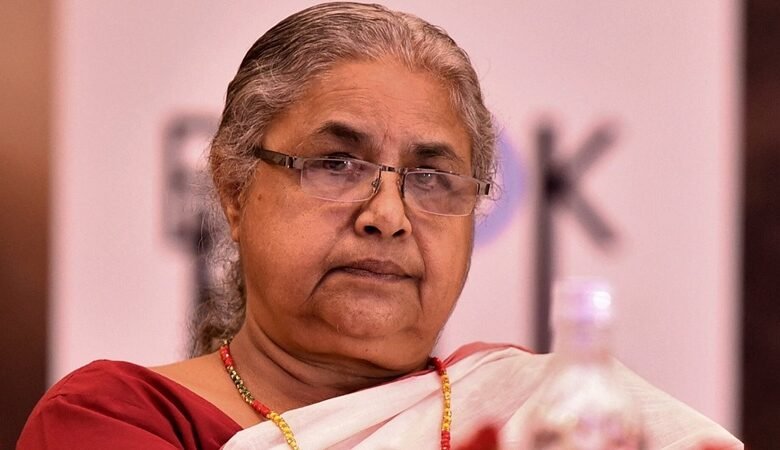
Sushila Karki, the former chief justice, was sworn in as Nepal’s interim prime minister tonight, and Kathmandu is preparing for a new chapter in its turbulent political history.
Sources claim that President Ramchandra Paudel, members of the Generation Z protest movement in Nepal, and General Ashok Raj Sigdel, the head of the Nepal Army, came to an agreement on this measure. Following days of historic protests that resulted in former Prime Minister KP Sharma Oli’s resignation, the agreement was finalized.
The 73-year-old Sushila Karki has no political experience. Her most well-known role was serving as Nepal’s first female chief justice from July 2016 to June 2017. Her zero tolerance policy for corruption, which garnered her both support and criticism, characterized her tenure on the court.
At a time when widespread protests against corruption and misrule are rocking Nepal, her reputation as an honest jurist has catapulted her into the political spotlight. Her position as interim prime minister was demanded by a sizable portion of the demonstrators.
The Nobel laureate Muhammad Yunus, who was asked to lead Bangladesh’s temporary administration last year after a student-led rebellion overthrew Sheikh Hasina, has already been compared to her selection.
Sushila Karki was raised in eastern Nepal after being born in 1952 as the oldest of seven children in a farming family. Bishweshwar Prasad Koirala, Nepal’s first democratically elected prime minister in 1959, was close to her family.
After graduating from Mahendra Morang Campus with a Bachelor of Arts degree in 1972, Ms. Karki went on to Banaras Hindu University (BHU) in India to earn a master’s degree in political science in 1975. She graduated with a Bachelor of Laws from Tribhuvan University in Kathmandu three years later, in 1978.
Her appointment as a temporary judge at Nepal’s Supreme Court in 2009 marked the beginning of her ascent in the court. She was confirmed as a permanent judge a year later, and by July 2016, she had become chief justice.
Alleging prejudice in a decision that disqualified the influential head of the anti-corruption body, MPs from the then-dominant Nepali Congress and CPN (Maoist Center) filed an impeachment motion against her in April 2017. She was immediately suspended as a result of the move.
The endeavor failed. The Supreme Court of Nepal stepped in and stopped further proceedings when public demonstrations in support of judicial independence broke out. Within weeks, the impeachment motion was withdrawn, and Ms. Karki resumed her duties before retiring in June 2017.
She oversaw a number of historic cases while serving as chief judge, including the corruption conviction of Jaya Prakash Prasad Gupta, the minister of information and communications.