Air Force Chief Says World Should Learn From India’s Swift Conflict Resolution
News Mania Desk / Piyal Chatterjee / 19th September 2025

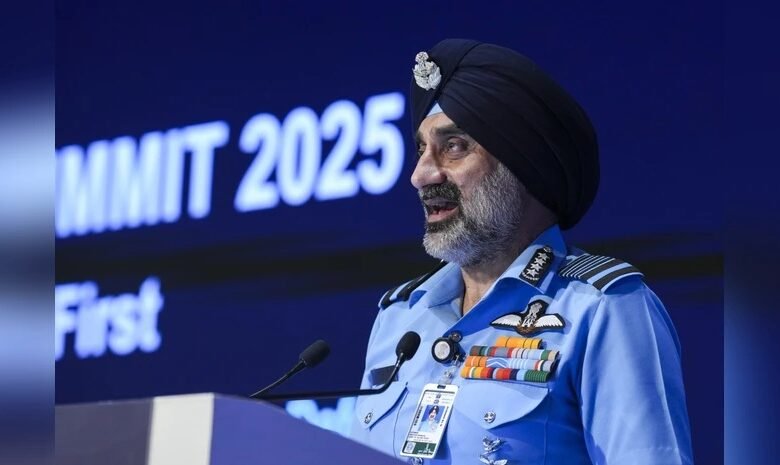
New Delhi – Air Chief Marshal A.P. Singh has asserted that the international community should take lessons from India on how to end wars quickly and decisively. Speaking about India’s recent military action against Pakistan, he stressed that prolonging hostilities beyond strategic objectives only drains resources and weakens preparedness for future challenges.
Referring to Operation Sindoor, which began on May 7 following the terror attack in Pahalgam, the Air Force Chief explained that India’s mission was clearly defined: to destroy terror launch pads and dismantle key terror infrastructure across the border. The operation, involving targeted strikes and missile responses, achieved its goals within four days. Hostilities were then halted, a decision Singh defended as both prudent and necessary.
Responding to criticism from sections of the opposition who questioned why the military offensive was not extended, Singh argued that India’s aim was counter-terror action, not prolonged war. Continuing the campaign, he said, would have imposed unnecessary costs on the economy, strained the armed forces, and disrupted long-term security planning. He emphasised that effective conflict management means knowing when to stop once objectives are met.
Drawing parallels with global crises such as the Russia-Ukraine conflict and the Israel-Hamas war, Singh noted that many nations fail to prioritise conflict termination, resulting in wars dragging on for years with heavy human and economic tolls. By contrast, he said, India demonstrated a model where decisive military action was followed by a timely conclusion, ensuring both deterrence and stability.
The Air Force Chief underlined that Operation Sindoor should be seen as an example of strategic clarity and restraint. He urged global powers to rethink the way wars are fought and to adopt approaches that avoid escalation once military goals are achieved.