
Pakistan Seeks U.S. Investment to Develop Arabian Sea Port Following White House Meeting
News Mania Desk / Piyal Chatterjee / 4th October 2025

Pakistan has formally approached the United States with a proposal to develop a commercial port on the Arabian Sea, aimed at enhancing access to the country’s mineral-rich western regions. The port is planned for Pasni, a strategic town in Balochistan province, near the borders with Afghanistan and Iran.
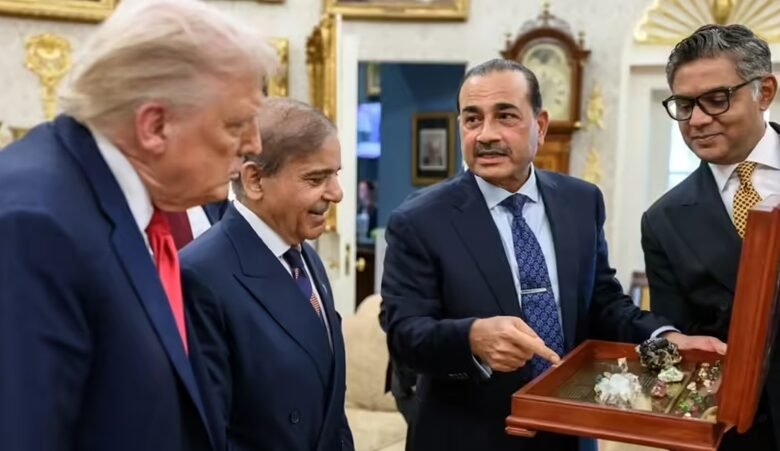
According to reports, advisers to Pakistani Army Chief General Asim Munir presented the proposal to U.S. officials shortly after a high-level visit to Washington, where Prime Minister Shehbaz Sharif and Munir met with former U.S. President Donald Trump. During the September meeting, Sharif reportedly sought broader U.S. investment across multiple sectors, including agriculture, energy, technology, and mining, signaling Islamabad’s desire to strengthen economic ties with Washington.
The port project is envisioned as a commercial facility operated by American investors, explicitly excluding military use. Plans also include the construction of a rail corridor linking the port to mineral-rich western provinces, facilitating efficient transportation of raw materials and bolstering trade logistics. Officials believe this infrastructure could significantly improve Pakistan’s access to international markets while attracting long-term foreign investment.
Experts note that the initiative reflects Pakistan’s strategy to diversify foreign investment sources and reduce reliance on traditional partners, including China. By involving U.S. stakeholders, Islamabad aims to position itself as a commercially attractive hub while fostering closer bilateral economic cooperation.
While the proposal has been formally submitted, neither the U.S. State Department nor Pakistan’s Ministry of Foreign Affairs has issued an official comment. Observers say approval and implementation could take time, given the geopolitical sensitivities of port development in a strategic coastal region.
If realized, the project could serve as a milestone in Pakistan-U.S. economic relations, potentially transforming trade and infrastructure dynamics along the Arabian Sea corridor and offering a new avenue for investment and regional connectivity.