
Diwali Fireworks Cloud India-Pakistan Skies, Trigger Pollution Alarm Across Border
News Mania Desk / Piyal Chatterjee / 21st October 2025

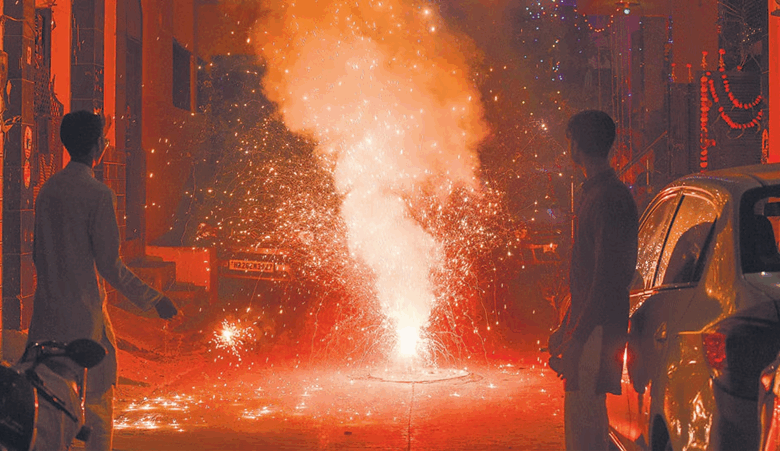
The Diwali festivities over the weekend have once again cast a thick haze across northern India and parts of Pakistan, as fireworks lit to celebrate the festival of lights sharply deteriorated air quality on both sides of the border. What began as a night of celebration in India soon turned into an environmental concern stretching into Pakistan’s Punjab province, with Lahore waking up to suffocating smog and an Air Quality Index (AQI) reading of 266 — ranking it the world’s second most polluted city after New Delhi.
Pakistan’s provincial government in Punjab blamed the worsening air quality not only on local pollution sources such as vehicular emissions, industrial smoke, and stubble burning but also on pollutants drifting from across the Indian border. Meteorological data showed light winds, moving at 4–7 km/h, carrying fine particulate matter from cities like Amritsar and Ludhiana into Lahore and surrounding areas. Officials in Lahore said the air remained stagnant, trapping smoke from both local and cross-border sources, creating a dense blanket of smog that has become an annual post-Diwali occurrence.
In response, Lahore authorities launched emergency anti-smog operations, deploying water sprinklers and air-cleaning guns along major highways and densely populated neighbourhoods. Special “smog response squads” carried out raids on polluting factories, brick kilns, and tyre-burning units, resulting in 83 arrests for environmental violations. The Punjab government has also intensified surveillance on industrial zones to ensure compliance with emission control regulations.
Meanwhile, Delhi and other parts of northern India faced similar conditions. Despite court orders allowing only “green crackers,” widespread firework use continued through the night, sending PM2.5 concentrations soaring above 248 µg/m³ in several localities — nearly 40 times higher than the World Health Organization’s safe limit. The city’s AQI remained in the “severe” category for much of the following day, aggravating respiratory ailments and visibility issues.
Experts have called the situation a “transboundary pollution crisis,” emphasizing that air pollution is not confined by political boundaries. The exchange of pollutants between India and Pakistan underscores the urgent need for joint regional strategies and stricter enforcement of emission controls during festive periods.
Environmentalists warn that without coordinated action and better public compliance, the annual spike in post-Diwali pollution will continue to endanger public health and worsen the climate burden. As Delhi and Lahore remain shrouded in smog, the celebrations of light have once again illuminated the dark side of unchecked festivities and shared air quality challenges in South Asia.