West Bengal farmers achieve successful paddy farming using ecofriendly chemical fertilizer alternatives
Saikat Kumar Basu -14th November 2025

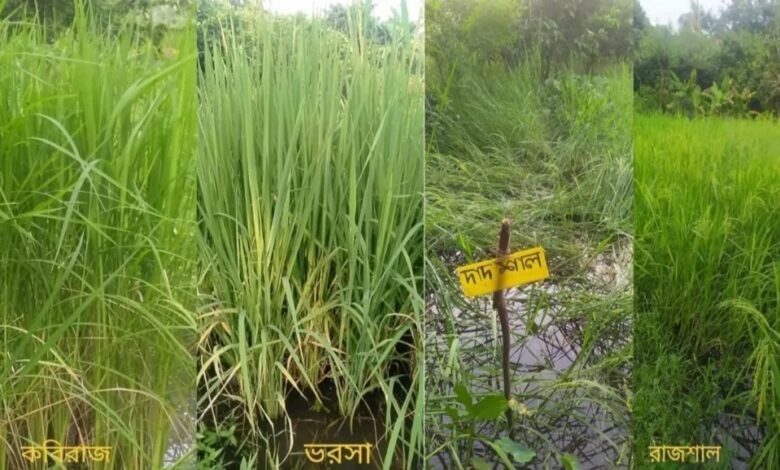
The Paribesh Unnayan Porishad (PUPA) at Sagar Island, West Bengal under the visionary leadership of retired ZSI scientist Dr. Amalesh Mishra and his team members conducted trials on High Yielding Varieties (HYVs) of paddy using Improvised Organic Manure (IOM), which consists of organic sources of NPK and micronutrients, along with beneficial microbes. The manure is prepared using cow dung, cow urine, mustard cake, molasses and other locally available ingredients combined with moist garden soil. This unique formulation is a sustainable alternative designed by PUPA against the indiscriminate use synthetic chemical fertilizers with long term negative ecological impacts on the local environment.
.The team developed an Improvised Organic Manure (IOM) — a balanced and biologically active fertilizer containing organic sources of NPK, micronutrients, and beneficial microbes. Prepared from locally available ingredients such as cow dung, cow urine, mustard cake, poultry litter, boiled paddy dust, paddy husk ash, molasses, and moist garden soil, IOM presents a practical and cost-effective solution to reduce dependence on synthetic fertilizers.
Field Trials and Results
IOM was tested on High Yielding Varieties (HYVs) of rice, including Annada and Ganga. Application rates were 100 kg per 0.33 acre during land preparation, followed by two doses of 50 kg each—30 days after sowing and before flowering.
- Annada: 65 tillers with IOM vs. 58 with chemical fertilizer; yield: 816 kg/0.33 acre (IOM) vs. 806 kg (chemical).
- Ganga: 25 tillers with IOM vs. 30 with chemical fertilizer; yield: 720 kg/0.33 acre (IOM) vs. 749 kg (chemical).
Results indicate that IOM achieves comparable, and in some cases higher, productivity while maintaining soil health and ecological balance.
Conservation and Adaptation Efforts
During the COVID-19 lockdown (2019–21), PUPA continued its work conserving indigenous and salt-tolerant rice varieties. Farmers cultivating these traditional strains in saline-prone areas saw productivity gains of 800–1000 kg per hectare, improving both livelihoods and climate resilience.
Pilot Study and On-going Work
A pilot study (Dec 2021–Apr 2022) compared Jeera Rice and N-Sankar varieties using IOM versus chemical fertilizers. Yields with IOM were slightly higher—1100 kg/bigha (Jeera) and 1120 kg/bigha (N-Sankar)—than their chemical counterparts.
The comparative study (2024) shows that paddy farming without chemicals despite being practiced on much smaller plots, delivers stable and often higher productivity per unit area than chemical farming. Organic plots (2 kathas) yield 600–900 kg per bigha with consistent performance, while chemical fields (up to 2 bigha 8 katha) range widely from 350–962 kg per bigha (0.33 acre) Organic methods also record slightly higher tiller counts (15–18 vs. 15–17) and healthier crop growth. Using only Integrated Organic Manure (IOM), organic farming is low-cost and environmentally sound, whereas chemical farming depends on urea, potash, phosphate, and insecticides, increasing both expenses and ecological risks.
Importantly, organic plots withstand adverse weather better, suffering fewer losses from heavy rain than chemical fields. Overall, the findings highlight organic cultivation as a resilient, low-input, and sustainable approach—particularly suitable for small and marginal farmers in climate-sensitive regions. PUPA remains committed to promoting eco-friendly practices across the state, demonstrating that organic formulations like IOM can maintain yield performance, enhance soil fertility, and significantly reduce agricultural pollution.