
UN Human Rights Office in “Survival Mode” Amid $90 Million Funding Shortfall
News Mania Desk / Piyal Chatterjee /11th December 2025

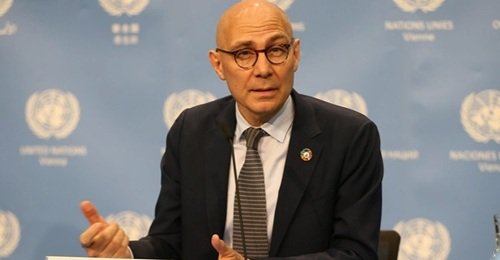
The United Nations human-rights office (OHCHR) has entered what its leadership describes as “survival mode” after suffering a massive hit to its 2025 budget, forcing deep job cuts and curtailment of core operations worldwide.
Addressing the media, Volker Türk — the UN’s human rights chief — confirmed that the office is facing a shortfall of roughly US $90 million this year. As a result, 300 staff members have already been laid off, and critical programmes are being scaled back.
The funding crisis has had immediate, wide-reaching consequences. Investigations and monitoring missions in conflict-affected countries including Colombia, the Democratic Republic of the Congo, Myanmar and Tunisia have been reduced or postponed. Independent country visits by special rapporteurs — a key tool for assessing human rights conditions — have also been slashed. Moreover, treaty-compliance reviews of member states have dropped from 145 to 103 this year, highlighting a sharp reduction in oversight capacity.
Türk warned that this comes at a time when global needs — from Ukraine to Sudan, Gaza and beyond — continue to rise, making the cuts particularly ill-timed. He expressed grave concern that limited resources may jeopardize both international and domestic efforts to defend human rights amid escalating violence and humanitarian crises.
Beyond the visible shutdown of investigations and field operations, the office’s reduced presence is already compromising long-term initiatives — such as capacity building in grassroots human-rights organisations and follow-up on prior findings. The abrupt downgrade in staffing and global engagement has raised alarm among rights advocates, many of whom fear that decades-long gains may be reversed if the crisis continues.
The funding shortfall is part of a broader trend of donor fatigue, shrinking voluntary contributions, and shifting global priorities, which have affected multiple UN agencies this year. OHCHR is now calling on member states, philanthropic organisations, and civil society to step up support and ensure the survival of core human-rights monitoring frameworks. Without urgent new funding, the office fears further programme cuts — with threatened consequences not only for global watchdog functions, but for vulnerable populations across conflict zones and oppressive regimes.
The next few months may prove decisive: whether OHCHR can raise adequate resources will determine if it can continue playing its vital role in documenting abuses, supporting victims, and holding states accountable — or if it will be reduced to only minimal operations, far removed from the scale of global human-rights challenges.