
Serious river erosion in Murshidabad district of West Bengal
Saikat Kumar Basu -16th December 2025


Murshidabad, located in West Bengal along the Ganga–Padma River system, faces severe and recurrent riverbank erosion—a major environmental and socio-economic concern. Both natural and human-induced factors play a role in aggravating this problem. The constantly shifting course of the Ganga and its distributaries causes large-scale bank cutting. The meandering nature of the river, along with high sediment load, weakens the stability of riverbanks. The riverbanks in Murshidabad are mainly composed of loose alluvial soil, sand, and silt, which are easily eroded during high discharge or monsoon flooding.
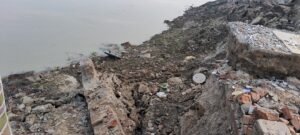
Intense monsoon rains lead to flooding and strong water currents that accelerate erosion, especially during peak flow periods. Removal of natural vegetation along the banks reduces soil binding, increasing vulnerability to erosion.
Heavy upstream silt deposition raises the riverbed, forcing the river to change course frequently and erode its banks more aggressively. Irregular rainfall, rising temperatures, and glacial melt in the Himalayas alter river discharge patterns, intensifying erosion risks.

Dense populations along the riverbanks for agricultural and livelihood needs increase vulnerability. People settle close to the river due to fertile soil and access to water.
Intensive cultivation and encroachment on riverbanks disturb natural drainage and weaken soil structure, leading to higher erosion. Erosion displaces thousands annually, but limited economic options compel resettlement near eroding zones, creating a cycle of vulnerability. Weak embankments, poor maintenance, and delayed governmental interventions worsen the situation. Riverbank erosion forces large-scale displacement, creating “erosion refugees”. This leads to social instability, land conflicts, and loss of traditional community Lack of awareness about sustainable land use and riverbank protection techniques contributes to recurring damage.

The State Irrigation Department and the Central Water Commission have undertaken several anti-erosion projects, such as the construction of spurs, revetments, and embankments. However, due to the magnitude of the problem and lack of continuous maintenance, these measures often provide temporary relief. Local NGOs and community groups have also raised awareness and assisted affected families.