Supreme Court to release verdict on Umar Khalid
News Mania Desk /Piyal Chatterjee/3rd January 2026

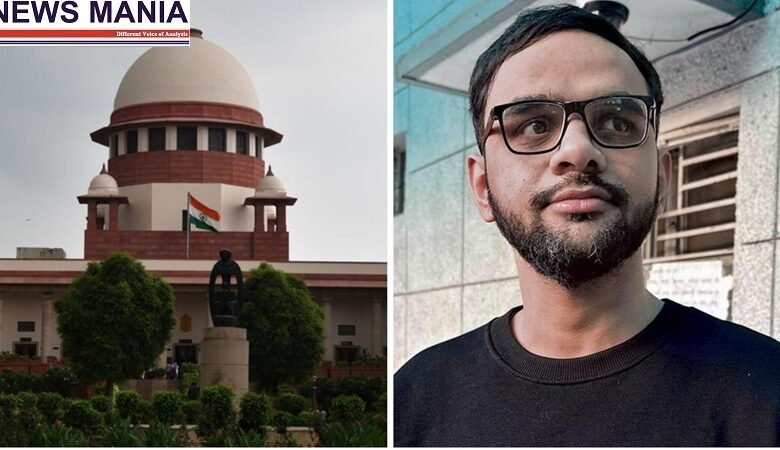
New Delhi: The Supreme Court is scheduled to pronounce its verdict on January 5 on the bail pleas of activist Umar Khalid, scholar Sharjeel Imam, and several others accused in the alleged larger conspiracy behind the 2020 Northeast Delhi riots. The judgment, reserved after detailed hearings, will determine whether the accused will be granted relief after spending several years in custody under stringent anti-terror laws.
A bench comprising Justices Aravind Kumar and N. V. Anjaria heard extensive arguments from both the prosecution and the defence before reserving its decision. The appeals before the apex court challenge a Delhi High Court order that had earlier refused bail to the accused, citing the seriousness of the charges and the material placed by the investigating agency.
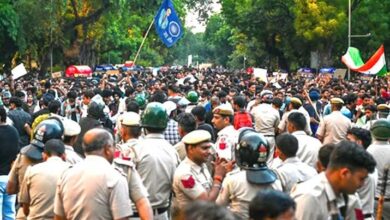
The accused have been booked under provisions of the Unlawful Activities (Prevention) Act (UAPA) along with sections of the Indian Penal Code, in connection with allegations that the February 2020 violence was the outcome of a pre-planned conspiracy. The riots had left more than 50 people dead and hundreds injured, causing large-scale damage to property in parts of the national capital.
Opposing bail, the prosecution argued that the violence was not spontaneous but the result of deliberate planning and coordination. It claimed that inflammatory speeches, protest planning, and behind-the-scenes coordination were part of a wider design to trigger unrest. The government maintained that in cases involving grave allegations under UAPA, courts must exercise extreme caution and that prolonged custody alone cannot be a decisive factor for granting bail.
The prosecution also contended that the delay in the trial could not be attributed solely to the investigating agencies and argued that releasing the accused at this stage could potentially affect the integrity of the proceedings.
On the other hand, the defence strongly pressed for bail, highlighting that the accused have been incarcerated for several years without the trial reaching a meaningful conclusion. Senior lawyers representing the accused argued that the right to personal liberty and the principle that bail should be the norm, not the exception, must be upheld, especially when guilt has not been established.
Sharjeel Imam’s counsel emphasised that his arrest predated the outbreak of the riots and argued that speeches or ideological positions cannot, by themselves, be treated as proof of criminal conspiracy. The defence also questioned the interpretation of evidence relied upon by the prosecution, asserting that lawful protest and dissent were being criminalised.
Apart from Khalid and Imam, the case also involves other accused including Gulfisha Fatima, Meeran Haider, Shifa ur Rehman, Mohd. Saleem Khan, and Shadab Ahmed, all of whom have challenged earlier bail rejections.
The Supreme Court’s verdict is keenly awaited as it is expected to have significant implications for the interpretation of bail provisions under UAPA and for long-pending cases arising from the 2020 Delhi riots.