Lack of menstrual access denies girls their right to education: Supreme Court
News Mania Desk /Piyal Chatterjee/30th January 2026
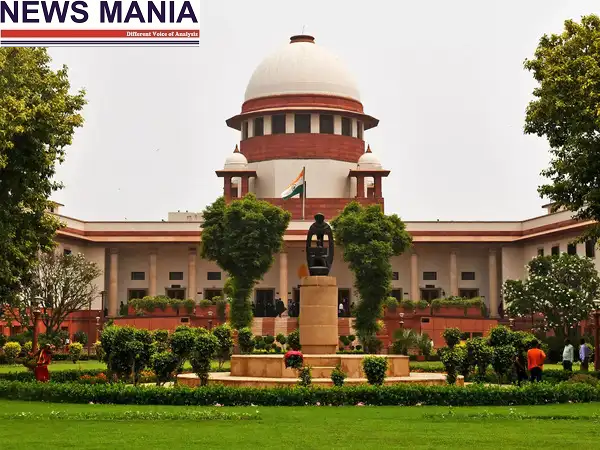
The Supreme Court declared on Friday that the absence of gender-segregated restrooms and menstrual hygiene products in schools violates the fundamental rights of female pupils, including the rights to education, equality, health, dignity, and privacy.
The right to education is a “multiplier right” that “enables the exercise of other human rights” and is “part of the broader framework of the right to life and human dignity” under the Constitution, according to Justice JB Pardiwala, who rendered the decision in a Public Interest Litigation (PIL).
Due consideration must be given to institutional and contextual hurdles that impede access to education, and the “fundamental right to education includes removal of all impediments that hinder access,” the court stated, criticizing the governments for failing to take steps to ensure these. The bench stated, “The State must endeavour to remove such barriers,” emphasizing that a girl child’s capacity to attend school and, consequently, exercise other fundamental rights is directly impacted by the lack of menstrual hygiene services.
The court emphasized that the state must take proactive measures to protect these rights in addition to refraining from violating people’s right to privacy and dignity.”Lack of access to menstrual hygiene deprives basic rights to dignity and privacy”.
“The right to menstrual health is part of the right to life and right to health. Girls have the right to a healthy reproductive life and menstrual health. The right to equality includes the right to equal opportunity,” the Supreme Court remarked.
The court clarified that both private and public schools must guarantee adherence to the right to education. The court also ordered all states and Union Territories to make sure that all schools have free, oxo-biodegradable sanitary napkins that meet the required criteria. These goods must be offered in school restrooms or at a specific location on school property.
Additionally, schools are required to set up menstrual hygiene management areas that are stocked with necessities like extra uniforms, disposable bags, and innerwear. Additionally, the court ordered education and awareness campaigns about menstrual periods and hygiene.
“We want to tell every girl child who was denied access to education because her body was said to be unclean, it is not her fault,” the court added. The Supreme Court also noted that silence by parents and teachers adversely affects girls’ access to education and said, “We want to tell every girl child who became a victim of absenteeism due to lack of information, it is not your fault.”