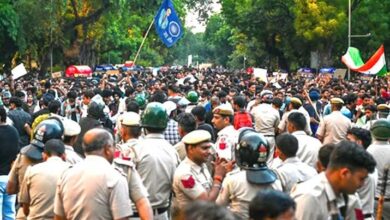
Sonam Wangchuk wants Ladakh to become Nepal: Govt defends incarceration in Supreme Court
News Mania Desk /Piyal Chatterjee/ 4th February 2026
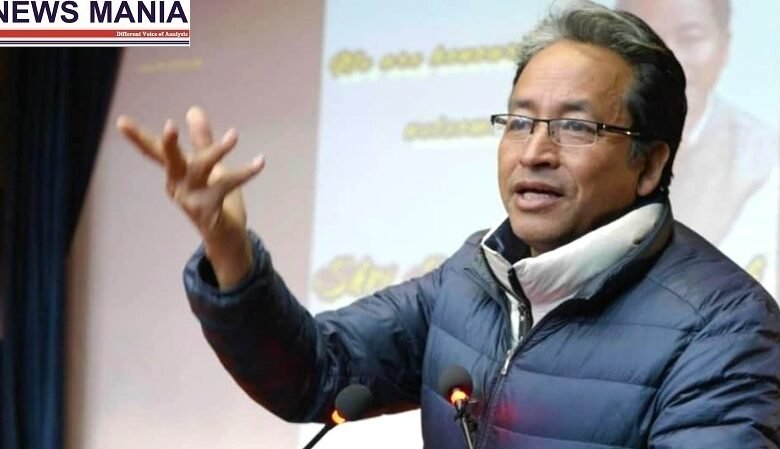
The Centre on Monday justified the preventive custody of Ladakh-based social activist Sonam Wangchuk before the Supreme Court, stating that his public comments amounted to incitement, separatist messaging and a threat to national security, particularly in a strategically critical border region.
Appearing for the Union government, Solicitor General Tushar Mehta told the court that Wangchuk had attempted to provoke the younger generation into pushing Ladakh towards a situation similar to Nepal, Bangladesh and Sri Lanka, citing violent uprisings and political instability in those countries as examples. Geetanjali, Wangchuk’s wife, filed a plea contesting his incarceration, which was being heard by a bench of Justices Aravind Kumar and Prasanna Varale.
The Bench first noted that the court does not sit in appeal against detention decisions under Article 32, and the main issue was whether the grounds, justifications, and evidence used for detention had anything to do with national security. The Solicitor General argued that the court’s job was to determine whether the District Magistrate (DM) had good reason to believe Wangchuk’s acts could disturb public order, not to judge its own satisfaction.
The DM determined that Wangchuk’s comments had the potential to instigate harmful activities and violate public tranquility, as stated in the detention order. Mehta said the detention order was given after due process and within four hours.
He informed the court that Wangchuk had acknowledged the authenticity of the video clips of his speeches after a DIG had met with him and given them to him. Reading out excerpts of Wangchuk’s speech in court, Mehta said that the activist carefully separated offensive words from references to non-violence and Mahatma Gandhi, using the latter as a cover.
“The district magistrate must see the speech in its entirety. You cannot pick one line, one word, or one sentence and say, ‘I was only saying what Gandhiji said,’” Mehta submitted, adding that “Gen Z has its own dictionary.”
He cited Wangchuk as saying that a sudden influx of young protesters had emerged “like a flood”, and that he did not know where they had come from, but that “they were expecting a Nepal-like riot situation” and could take inspiration from Nepal. Mehta told the court that Wangchuk was deceiving the youth into believing they should do what Nepal had done, and that mentioning Mahatma Gandhi was only a ruse to mask an otherwise offensive speech.