When Women Become Weapons: A Dangerous Turn in the Baloch Insurgency
Ms.Bornali Biswas –Editor in Chief-7th February 2026
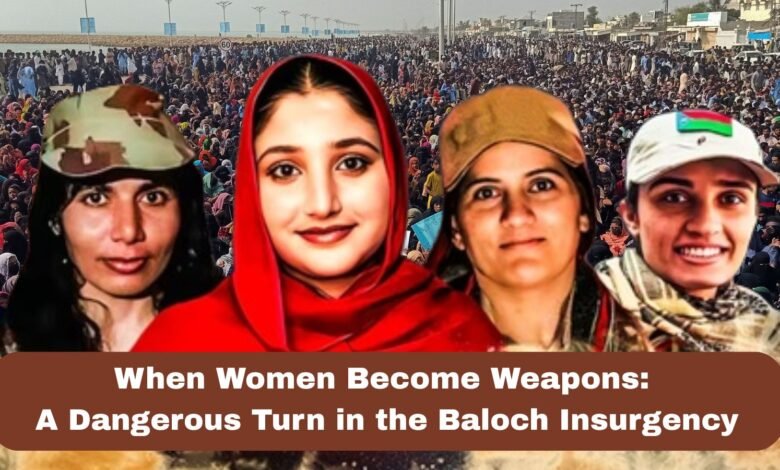
The emergence of women as suicide bombers in Balochistan marks a disturbing escalation in the region’s long-running insurgency and signals a strategic shift by militant groups rather than a spontaneous social transformation. The Baloch Liberation Army’s recent Operation Herof Phase II, followed by similar tactics adopted by rival outfits, underscores how militancy is adapting under sustained military pressure and diminishing public legitimacy.
Historically, the Baloch insurgency was male-dominated, with suicide attacks considered both tactically unnecessary and morally contentious. Women associated with the movement were largely confined to indirect roles—mobilising opinion, fundraising, or participating in rights-based protests. That boundary collapsed in April 2022 with the first confirmed female suicide attack, and since then the trend has accelerated. The participation of educated, middle-class women challenges simplistic assumptions that such violence is driven solely by poverty or lack of awareness.
Militant groups are deploying women for calculated reasons. In a deeply patriarchal society, a female suicide bomber carries immense symbolic weight. It allows insurgent leaders to project a narrative of total societal desperation—suggesting that state repression has become so severe that even women are compelled to embrace extreme violence. This symbolism is weaponised both externally, to attract attention and legitimacy, and internally, to shame men into joining the insurgency.
There is also a tactical logic. Women are less likely to be suspected at checkpoints, can bypass certain security protocols, and generate far greater media impact. Once one faction adopts the tactic, competitive emulation sets in, as seen in the way rival Baloch groups that once criticised suicide bombings have now embraced them. The use of women thus reflects organisational pragmatism, not ideological evolution.
However, framing female suicide bombers as empowered actors risks falling into the militants’ narrative trap. These women operate within highly controlled militant structures where agency is shaped, constrained, and often manipulated. Their deaths serve strategic ends decided overwhelmingly by male leaderships who remain distant from the battlefield.
The rise of female suicide attacks should therefore be read as a sign of insurgent desperation as much as resolve. It indicates shrinking operational space, heightened militarisation, and a turn towards shock value over sustainable political mobilisation. For the state, a purely security-centric response risks reinforcing the very narratives militants seek to construct. Addressing this phenomenon demands not only counterterrorism measures but also credible political engagement, accountability, and social outreach—especially toward women—lest militancy continue to exploit despair as its most potent weapon.