Rahul Gandhi Slams Centre Over India-US Trade Deal, Alleges Surrender of National Interests
News Mania Desk /Piyal Chatterjee/ 12th February 2026
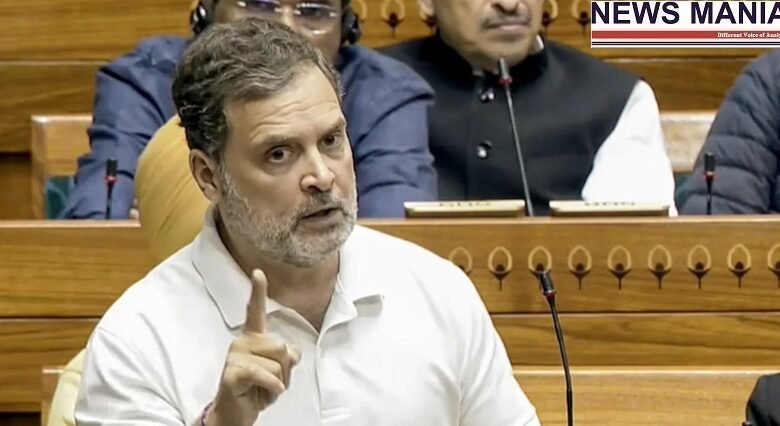
Congress leader and Leader of the Opposition Rahul Gandhi launched a sharp attack on the central government in Parliament, accusing it of compromising India’s sovereignty through the recently announced interim trade arrangement with the United States. Speaking during a heated debate, Gandhi claimed the government had “sold Bharat Mata” by accepting terms that, according to him, weaken India’s economic and strategic position.
Addressing the Lok Sabha, Gandhi alleged that the deal reflected a one-sided negotiation that favoured the United States at the cost of Indian interests. He argued that the agreement would expose key domestic sectors, particularly agriculture and dairy, to increased foreign competition, placing small and marginal farmers under severe pressure. Warning of serious consequences for rural livelihoods, he said the move could deepen existing economic distress across farming communities.
Gandhi also questioned the tariff structure under the arrangement, asserting that India had lowered duties on several American products while facing higher tariffs on its own exports. He claimed this imbalance would hurt Indian manufacturers and exporters, undermining the government’s stated goal of promoting domestic industry. Raising concerns about long-term implications, he suggested that India’s bargaining power had been diluted in the process.
In an emotionally charged remark, the Congress leader accused the government of surrendering before external pressure, framing the issue as one of national pride and self-respect. He argued that India should have negotiated as an equal partner rather than conceding ground, and said the agreement sent the wrong signal about the country’s standing on the global stage.
Gandhi further maintained that sensitive areas such as data, energy security and market access had been handled poorly. He alleged that the deal could limit India’s policy autonomy in the future, leaving critical sectors vulnerable to foreign influence. Emphasising the opposition’s stance, he said an alternative approach would have prioritised the protection of domestic interests while engaging constructively with global partners.
The remarks triggered strong protests from the treasury benches, with ministers and ruling party MPs rejecting the accusations as exaggerated and politically motivated. Government representatives countered that the agreement was in India’s interest and part of a broader strategy to strengthen economic ties with the United States. They accused the opposition of misleading the public and undermining India’s diplomatic efforts.