Israel resumes its attacks on Tehran while Iran strikes an oil refinery in Kuwait.
News Mania Desk/ Piyal Chatterjee/19th March 2026

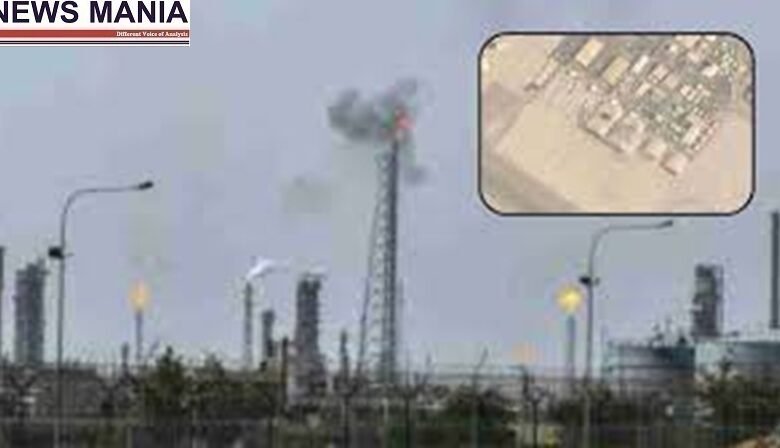
As Iran began a broad attack on energy infrastructure around the Gulf, drones hit Kuwait’s biggest oil refinery for the second day. Meanwhile, Israeli attacks caused explosions over Tehran as the nation celebrated the Persian New Year.
Early on Friday morning, as Kuwaitis celebrated Eid al-Fitr, the conclusion of the holy month of Ramadan, fires broke out across many units at the Mina al-Ahmadi refinery, which processes over 730,000 barrels of oil each day.Although there were no casualties, Kuwait’s national oil corporation said that many units had been shut down. The military said that incoming missile and drone threats were being aggressively intercepted by the nation’s air defenses.
The Islamic Revolutionary Guard Corps (IRGC) of Iran claimed to have also attacked American forces at the al-Dhafra airbase in the United Arab Emirates and locations within Israel. Bahrain claimed that shrapnel from what it described as “Iranian aggression” caused a warehouse fire, while the UAE reported incoming missile and drone threats. In under two hours, Saudi Arabia claimed that its forces had intercepted and destroyed over a dozen drones.
This week, Iranian Foreign Minister Abbas Araghchi issued a warning that the attacks on Gulf infrastructure were “a fraction” of the nation’s capabilities and vowed “zero restraint” in the event that Iran’s own energy facilities were targeted once more.
While US President Donald Trump distanced himself from the strike, Israeli Prime Minister Benjamin Netanyahu stated that Israel had acted alone in attacking South Pars and would refrain from launching other attacks on energy facilities. The largest LNG facility in the world, Ras Laffan in Qatar, was severely damaged by Iranian assaults, eliminating about 17% of the world’s LNG supply and costing an estimated $20 billion in income annually.
Saad al-Kaabi, head of QatarEnergy, stated that the extent of the damage has caused the region to regress “10 to 20 years” and that repairs might take three to five years. Additionally, Iran has closed the Strait of Hormuz, which carries around 25% of the world’s LNG and oil. This has caused energy prices to skyrocket and reduced supplies of everything from fertilizer to computer chips. Asia’s governments have already reduced business hours and rationed electricity.
The battle seems to be approaching “an escalatory phase,” according to Mujtaba Rahman, managing director of political risk consultancy Eurasia Group, who warned Al Jazeera that Asia and Europe would be most vulnerable depending on “how long the war continues.”Overnight, Israel attacked Iran once more. As Iranians celebrated Nowruz, the Persian New Year, explosions could be heard in Tehran. No more information was immediately available.
Israel expanded its operations to Syria on Friday, claiming that it targeted infrastructure there in retaliation for attacks on the Druze community in the southern province of Suwayda. The strike was not immediately acknowledged by Syria’s state-run news agency, SANA. Israel, which has a sizable Druze population, has already interfered in Syria to defend the Druze, attacking regime fighter convoys with numerous airstrikes and even hitting the Syrian Ministry of Defense headquarters in the heart of Damascus.
Over 1,300 Iranians have lost their lives in the conflict. The Lebanese government claims that over 1,000 people have been dead and that over a million people have been displaced as a result of Israeli strikes against the Hezbollah organization in Lebanon.