Voting rights could be lost by millions of Bengalis. Due to clerical errors rather than citizenship
News Mania Desk/ Piyal Chatterjee/27th March 2026

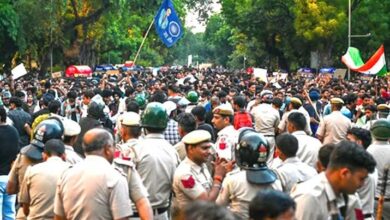
West Bengal will hold elections in less than a month. However, millions of people in the state are still unaware of their place on the voter roll. The Election Commission is doing a special, extensive revision of the voter rolls, which is the cause of the confusion. However, the process is still ongoing five months after it began. Furthermore, it is unclear how the procedure is being carried out.
The first supplemental voter list, which will determine the fate of six million voters “under adjudication,” was made public by the Election Commission late on Monday. The commission has yet to make public the state’s total data.
What happens to voters whose names have been removed? If they file their appeals within 15 days, special tribunals will hear them. This practically means that millions of people in West Bengal would not be able to cast ballots in the next elections due to the extent of the deletions and the short time frame.
Few things are more crucial in a democracy than having the right to vote. So why is it denied to so many people?According to the Bharatiya Janata Party’s political message, the purpose of this special rigorous revision is to eliminate non-Indians from the voter rolls.
This exercise is required since the party has long claimed that many Muslims from Bangladesh have moved in West Bengal. On the ground, though, this is not the case. The Election Commission has said unequivocally that citizenship is not a grounds for exclusion. Voter rolls in West Bengal are being subjected to a new “logical discrepancy” test.
This procedure has never been used in a voter roll revision in any other state. This test takes into account things like spelling mistakes in parents’ names, having too little or too much of an age difference with one’s parents, not having a significant enough age difference with one’s grandparents, or having more than six children.
According to data research, Muslims have been disproportionately affected by this new logical contradiction test. The BJP uses this as political justification for its claims of undocumented migration from Bangladesh, but the truth is that these are Indians who were left out because, at most, their paperwork contained clerical errors. During this particular intensive revision, there was not even a citizenship test.
Data about non-Indians detected in the Bengal special intensive revision has not been released by the Election Commission. The Election Commission’s independence is seriously put into question by the arbitrary tests used in the special intensive revision and the fact that a new category termed “logical discrepancy” ended up targeting Muslim voters in Bengal.
Given that the majority of Muslims in Bengal do not support the Hindutva party, the particular rigorous review will ultimately benefit the ruling party at the center.
The fact that this experiment demonstrates that there is little legal recourse for any citizen’s vote being revoked is even more concerning. Although the Bengal special intensive revision has been challenged in the Supreme Court, the court has actually involved the judiciary in the bureaucratic execution of the special intensive revision itself rather than making a decision about the exercise’s legality. Despite the lack of such a mechanism in Indian electoral law, district judges from three states are now doing the exercise.