
Rahul Gandhi Alleges ‘Cover-Up’ on Foreign Surveillance Risks; Centre Defends Security Measures
News Mania Desk/ Piyal Chatterjee/4th April 2026

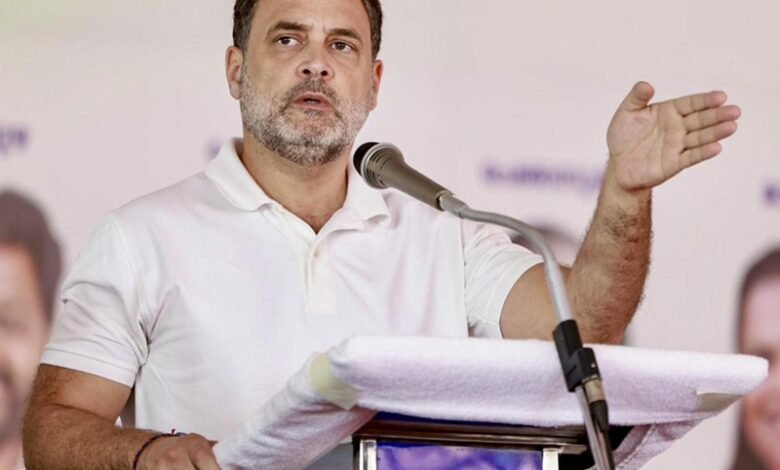
A fresh political confrontation has emerged after Rahul Gandhi accused the Centre of concealing the extent of foreign surveillance risks facing India. The Congress leader claimed that the government was not being transparent about vulnerabilities in national security systems, raising concerns over potential external monitoring and data breaches.
Gandhi’s remarks come amid growing debate over the use of foreign technology and surveillance tools in India’s security and communication networks. He alleged that critical questions regarding the safety of citizens’ data and the integrity of government systems remain unanswered, suggesting that there may be an attempt to downplay or “cover up” serious risks.
In response, the Union government rejected the allegations, asserting that it has taken significant steps to strengthen national security and safeguard digital infrastructure. Officials pointed to a series of reforms and upgrades implemented in recent years to counter cyber threats and enhance surveillance capabilities within a legal framework.
The government maintained that India’s security apparatus is equipped to deal with evolving global challenges, including cyber espionage and cross-border intelligence activities. It also emphasised that all surveillance operations are conducted in accordance with established laws and oversight mechanisms, dismissing the opposition’s claims as politically motivated.
The issue has once again brought the spotlight on concerns related to foreign-origin surveillance technologies and their potential misuse. Experts have long debated the risks associated with reliance on imported systems, particularly in sensitive sectors such as defence, telecommunications, and governance.
Gandhi, however, insisted that the matter goes beyond politics, arguing that transparency is crucial to maintaining public trust. He called for greater accountability and clarity from the government on how it is addressing vulnerabilities linked to foreign surveillance tools.
The ruling establishment countered by highlighting ongoing efforts to promote indigenous technology development and reduce dependency on external systems. Officials said initiatives aimed at boosting domestic manufacturing and innovation are part of a broader strategy to secure India’s digital and strategic ecosystem.
The exchange reflects a wider political divide over national security, data protection, and technological sovereignty. While the opposition continues to press for disclosures and scrutiny, the government has reiterated its commitment to strengthening security frameworks and protecting national interests As the debate intensifies, the issue of surveillance—both foreign and domestic—remains a key point of contention, with implications for policy, privacy, and India’s long-term technological independence.