BCP Adivasi Forum Holds Tribal Leadership Meeting in Kharagpur
Correspondent Ajay Chowdhury/10th April 2026

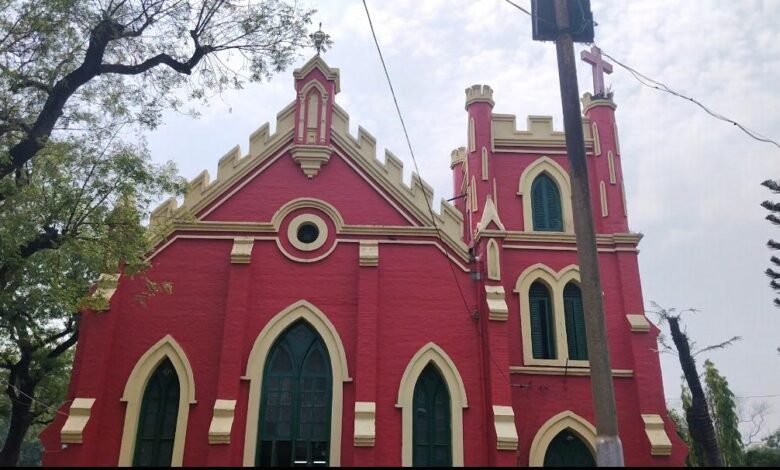
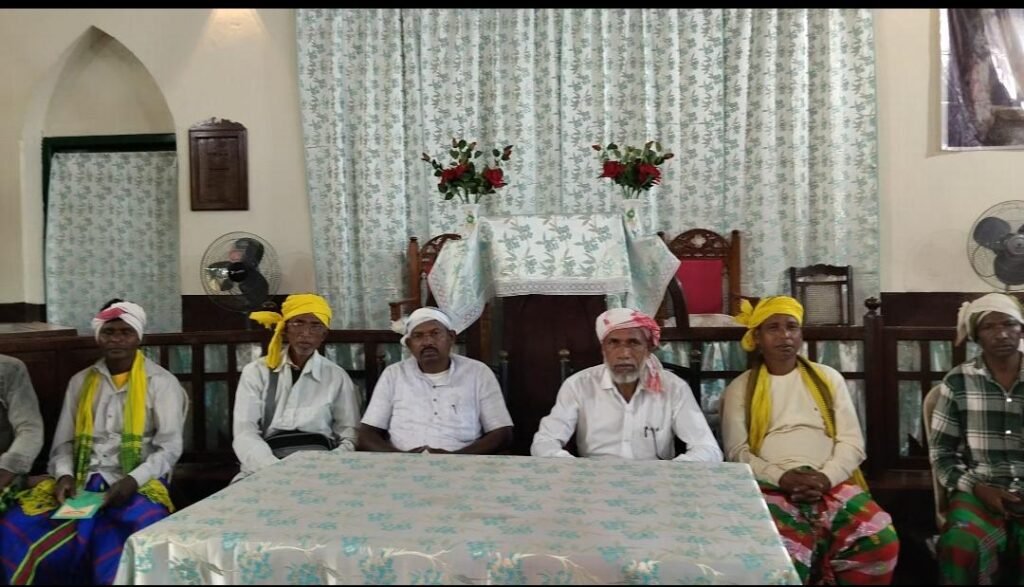
Kharagpur : A high-level tribal leadership meeting was held in Union Church at Bangalow Side in Kharagpur by the Adivasi Forum of Bangiya Christiya Parisheba (BCP) to discuss what leaders called a growing threat to the constitutional rights of tribal communities. Representatives from Paschim Medinipur, Jhargram, Bankura, Purulia, and Purba Bardhaman attended the convention.
The main aim of the meeting was to discuss the alleged attempts to take away tribal constitutional rights and to prepare a future action plan to protect them.
The meeting was chaired by Herod Mullick, Founder State Secretary of BCP. Among those present were State General Secretary Kanai Lal Giri, State Secretary and State Coordinator Victor Behera, BCP West Midnapore District Secretary Jeshai Singh, Pastor Nabin Mandi, and Advocate Aditya Tewari.
Speaking at the meeting, Herod Mullick said that the demand for “de-listing” of tribals has a long history. He said the issue, which began in earlier decades, is now being spread in different parts of the country for political reasons through organizations and public rallies. Leaders at the convention expressed concern that in the 2024–26 period, lack of resources is being used to create division among tribal communities.
Other speakers strongly argued against the de-listing movement. They said that tribal identity is based on ethnicity, ancestry, and community roots, not religion. According to them, changing one’s religion does not change one’s tribal identity.
The speakers also pointed out that Article 342 of the Indian Constitution does not place any religious restriction on Scheduled Tribe status. They explained that while Scheduled Caste status is historically linked to untouchability, Scheduled Tribe status is based on factors such as geographical isolation, cultural identity, and social distinctiveness.
The leaders further said that Christian tribals have continued to preserve their traditional identity. They noted that many still use their mother tongues, clan names such as Hansda, Kisku, and Munda, and traditional social customs, showing that their cultural roots remain strong.
To protect tribal rights, BCP adopted an action plan that will continue until December 2026. The plan includes forming area-based WhatsApp groups for awareness campaigns and sending messages to households through the “Somoy Kotha Bole” YouTube channel.
The organization also announced plans for Inter-church Santali dance and music competitions in memory of Birsa Munda, Sidhu, and Kanhu on the International Day of the World’s Indigenous Peoples. Leaders said they would encourage families to speak their mother tongues at home and wear traditional dress during festivals, ceremonies, and worship.
As part of cultural and social integration, BCP also decided to promote the use of tribal musical instruments and cultural elements in church services. At the same time, it plans to strengthen the “Jol-Jongol-Jomin” (Water-Forest-Land) movement by building ties with non-Christian tribal communities.
After the Kharagpur convention, similar leadership meetings will be held in Malda, Balurghat, Siliguri, and Jalpaiguri.
The meeting ended with a united message from the participants: tribal identity is natural and permanent, while religion is a matter of personal choice.