The new chief minister of Bihar is a man who vowed to “dethrone” Nitish Kumar.
News Mania Desk/ Piyal Chatterjee/14th April 2026

For more than fifty years, Nitish Kumar, a legendary figure, has controlled Bihar politics. In 1974, he joined the Janata Party as a novice. By the time he resigned as Chief Minister in April 2026, the 75-year-old had made history as a “sushasan babu,” or “good governance” guy, with unparalleled persuasive abilities.
He is still, in many respects, Mr. Bihar, a record ten-time chief minister who is deeply ingrained in the political and sociocultural fabric of the state. For Samrat Choudhary, the BJP, and everyone who will succeed him in that position, that is the problem.
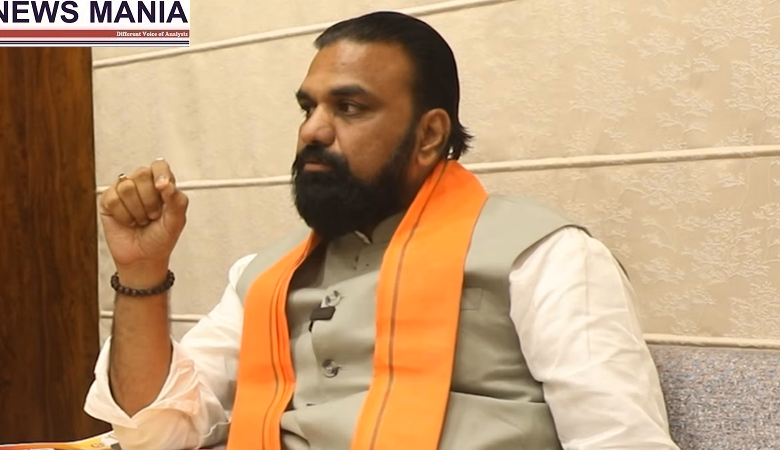
Choudhary, who was born in the Munger district in November 1968, has a notable political background. His mother, Parvati, won the same seat in 1998 for the now-defunct Samta Party, while his father, Shakuni, served as an MLA from the Tarapur constituency six times. In the 2025 election, Samrat Choudhary made a comeback to retake the family stronghold.
Samrat Choudhary, who is currently 57 years old, entered politics in 1990.
He was appointed Agriculture Minister in 1999 when Rabri Devi, the wife of Lalu Prasad Yadav, led the government and the BJP was an ally. He was elected to the Parbatta Assembly seat in both the 2000 and 2010 elections. Additionally, he was appointed Chief Whip in 2010 when the BJP was in the opposition.
Before joining the BJP in 2014, he attempted to arrange a split with over a dozen MLAs from Lalu Yadav’s Rashtriya Janata Dal and Nitish Kumar’s JDU.The BJP’s ruling class may have been uneasy at the time, but the more than ten years he has spent vociferously defending the saffron party should allay those concerns.From March 2023 to July 2024, Choudhary led the BJP’s Bihar branch. He also held other positions including the state’s minister of sports, finance, Panchayat Raj, and urban development and housing.
Because he will succeed Nitish Kumar and because the state’s infrastructure, economy, and public image are in dire need of reform, he brings a wealth of political and administrative expertise to what will be a challenging position. According to a caste study carried out by the Nitish Kumar government in 2023, he belongs from the politically powerful Kushwaha, which makes up 4.3% of the state’s population.
The Yadav community, from which RJD founder Lalu Prasad Yadav and his son Tejashwi Yadav are descended, is the largest OBC (Other Backward Class) group in Bihar, followed by the Kushwahas, who have historically been an agrarian population. The BJP needs to keep them on its side in order to make a name for itself in the post-Nitish Kumar era. This is especially important because the party does not actually have a leader from the Kurmi group, which is where the departing Chief Minister is from.
Unquestionably, Nitish Kumar’s enormous influence within the Janata Dal was crucial in propelling it to election victories, including the most recent one, that it most likely shouldn’t have achieved. However, it also implies that there isn’t a viable leadership alternative to keep the BJP at bay and keep the chief minister position in the party after his departure.
The promotion of Samrat Choudhary implies that the BJP has, at least temporarily, taken over the Bihar administration and the state’s political narrative from its ally. But what happens next is the true test.In 2030, Bihar will hold its next election. This allows Choudhary and the BJP to establish themselves as the dominant party in the state, much like Nitish Kumar’s JDU did for many years. Samrat Choudhary will know from experience that, in contrast to Bihar’s constantly shifting political narrative, being the chief minister and remaining the chief minister are two very different things.