Korean Ambassador Calls for Deeper India–ROK Partnership, Highlights Opportunities for West Bengal at CII Interactive Session
News Mania Desk/ BUDDHADEB MISRA/ 10th August 2026

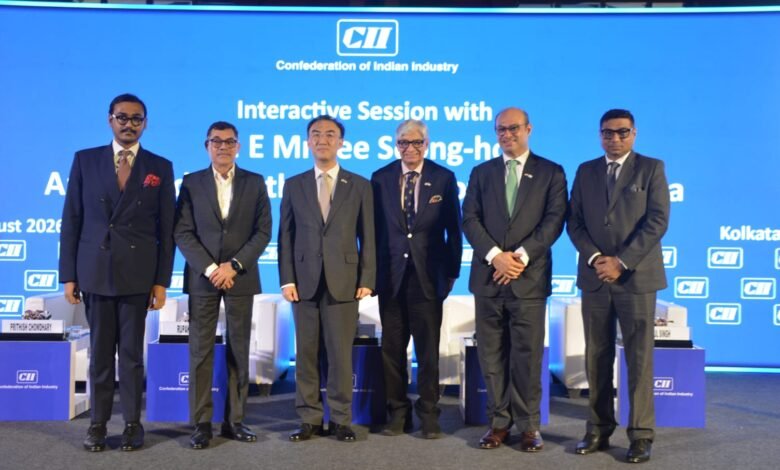
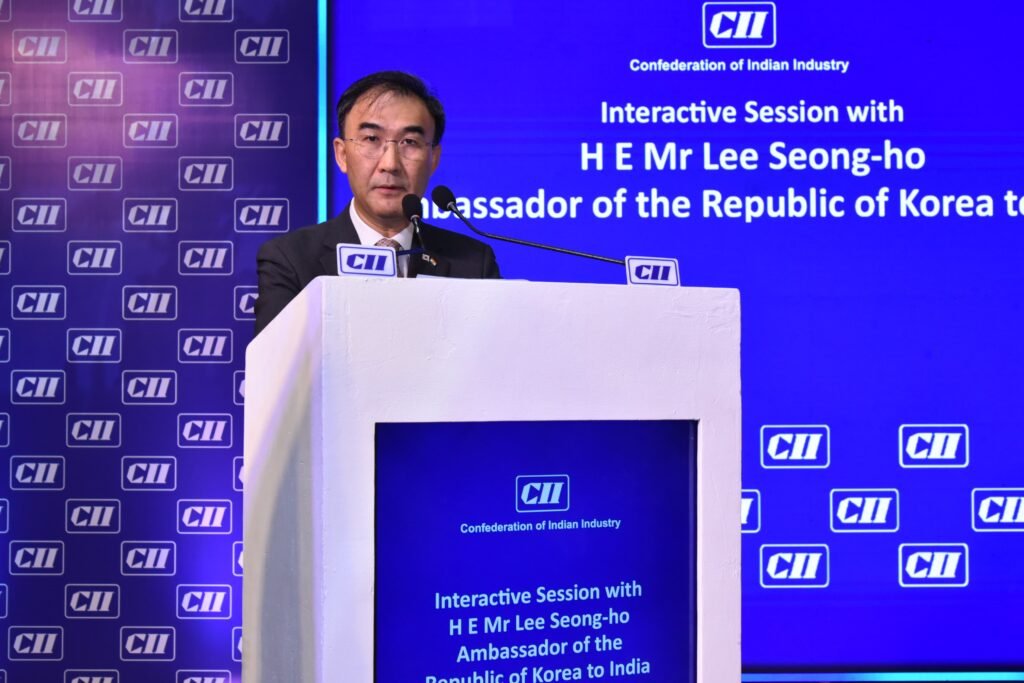
Highlighting the growing depth of India–Republic of Korea relations, H.E. Mr Lee Seong-ho, Ambassador of the Republic of Korea to India, emphasised the need to strengthen the strategic partnership into greater business, investment and technology cooperation in the interactive session initiated by CII in Kolkata. He identified AI, semiconductors, EVs, electronics, digital technology, R&D, energy and advanced manufacturing as key areas for deeper collaboration.
Ambassador outlined the Korean Global Business Centre (GBC) as an important platform to strengthen direct MSME-to-MSME engagement between the two countries. He stressed the need for Indian and Korean companies to work together through technology partnerships, plant visits, business matchmaking and technology transfer. He also highlighted the potential of establishing industrial townships in India, supported by both governments, where Korean companies and Indian MSMEs can operate within an integrated ecosystem, enabling supplier development, technology adoption and a more viable environment for businesses to grow.
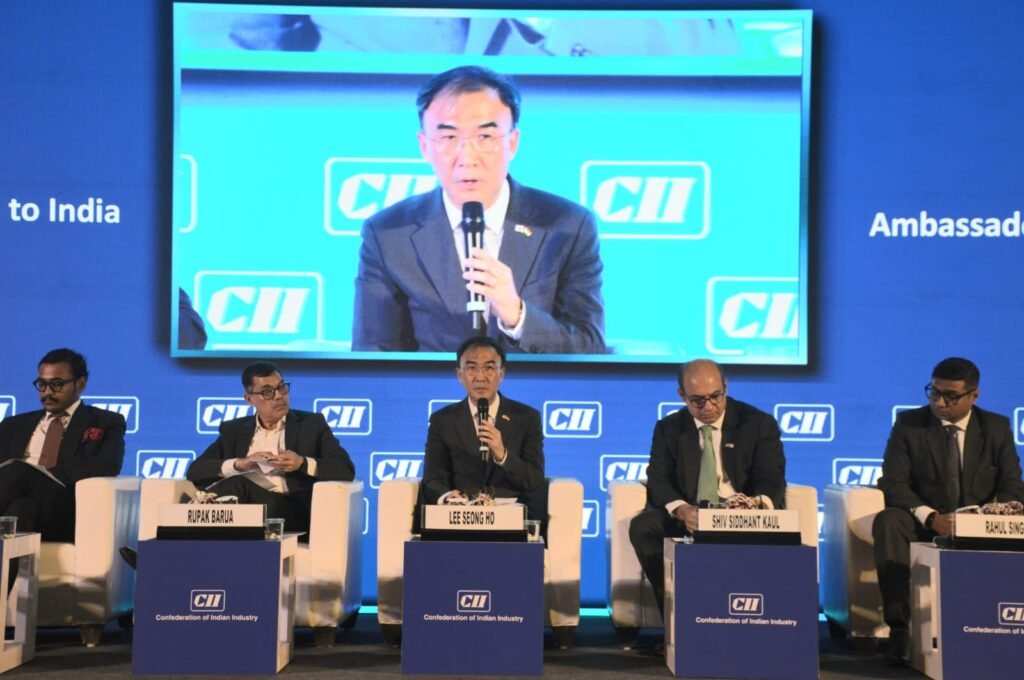
Speaking specifically about West Bengal, the HE Mr Lee Seong-ho, talked about the maritime heritage, Haldia and the port ecosystem, petrochemicals, plastics, logistics, mining and shipbuilding potential, along with its talent pool and traditional industries such as jewellery, leather, rubber and handicrafts. He encouraged West Bengal companies to explore partnerships with Korea, while noting opportunities for Korean companies to collaborate with the State in advanced manufacturing, shipbuilding, mining, EVs, semiconductors and digital technologies.
He further highlighted skill development and human-capital cooperation, referring to the Korean skill development initiative at IIT Mandi as an example of how industry, academia and Korean institutions can work together to create future-ready talent. He noted that as Korean investment in India increases, GCCs, R&D and engineering centres are likely to follow, further strengthening technology capabilities, employment and diversified trade between the two countries.
The Ambassador also emphasised the importance of the cultural relationship between India and Korea, noting that growing interest in Korean culture, entertainment and products in India is contributing to stronger people-to-people ties. West Bengal’s rich cultural heritage can further contribute to this broader relationship.
Mr Shiv Siddhant Kaul, Past Chairman, CII Eastern Region & Chair, CII National Environment Committee & Honorary Consul General, Republic of Korea & Managing Director Nicco Engineering Services Ltd highlighted the opportunities emerging from the strengthened India–Korea strategic relationship, particularly across supply chains, semiconductors, AI, R&D, energy, data centres and digital technologies. He also underlined the importance of strengthening cultural ties alongside economic cooperation and highlighted West Bengal’s strategic industrial strengths as a strong base for deeper Korean engagement.
Mr Rupak Barua, Chairman, West Bengal State Council & Managing Director & CEO Woodlands Multispeciality Hospital Ltd highlighted the positive growth in India–Korea trade, noting an approximately 20 per cent increase in trade during the first quarter compared with the corresponding period last year. He emphasised the potential for greater Korea–West Bengal engagement over the next five to ten years and identified healthcare and medical technology, including academic and industry collaboration, as emerging areas of opportunity.
The interaction underscored the need to deepen cooperation in EVs, renewable energy, advanced manufacturing and emerging technologies, with stronger industry-to-industry partnerships supporting the shared ambition of taking India–Korea bilateral trade towards USD 50 billion by 2030.