G20 Divided, India Rising: Why Global Economic Turmoil Could Strengthen New Delhi’s Position
News Mania Desk/ 4th September 2026

G20 Divided, India Rising: Why Global Economic Turmoil Could Strengthen New Delhi’s Position
The latest G20 finance ministers’ meeting in Asheville, North Carolina, has exposed deep divisions within the world economy. The gathering concluded amid a global bond-market selloff, disputes over tariffs and trade imbalances, disagreements over geopolitical issues and even public diplomatic friction. The failure to secure a fully unified statement, after China objected to language concerning trade surpluses and export-driven growth, highlighted the widening economic differences among major powers.
Yet, amid this uncertainty, India stands out as one of the economies with considerable room to gain.The global bond-market turbulence is a reminder of the risks created by excessive public debt, inflation and uncertain fiscal policies in major developed economies. Rising yields in the United States, Japan and Europe are increasing borrowing costs and competing for global investment capital. India’s Finance Ministry is closely monitoring these developments because global bond movements can influence the rupee, interest rates and capital flows into emerging markets.
India’s advantage lies in the relative strength of its domestic economic engine. Strong consumption, infrastructure investment, digitalisation, manufacturing expansion and a large services sector provide the country with multiple sources of growth. Unlike economies heavily dependent on exports, India can draw significant momentum from its vast domestic market.
The current trade confrontation could also accelerate India’s emergence as an alternative manufacturing and investment destination. As businesses seek to diversify supply chains and reduce excessive dependence on individual countries, India has an opportunity to attract new factories, technology investments and global capital.
India can also benefit diplomatically from its ability to maintain relationships with competing economic blocs. While the United States, China and Europe increasingly find themselves locked in trade and strategic disputes, New Delhi has positioned itself as a pragmatic partner with multiple major economies.
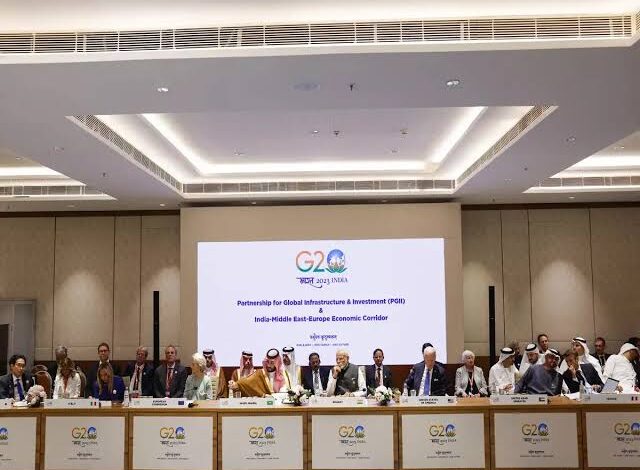
The G20 itself gives India an important platform. During its 2023 presidency, India pushed issues including reform of multilateral development banks, financial stability and greater representation for developing economies.
However, India cannot afford complacency. A prolonged global bond selloff, higher oil prices, protectionist tariffs or a stronger dollar could increase pressure on the rupee, inflation and external financing. The country will need continued fiscal discipline, structural reforms and policies that encourage private investment.
The central message from the latest G20 turmoil is therefore significant: while global economic leadership appears increasingly divided, India’s growth story is becoming increasingly difficult to ignore. If New Delhi can convert geopolitical uncertainty into investment, manufacturing and trade opportunities, the current global fragmentation could ultimately strengthen India’s position in the world economy.