SpaceX Launches $4.3 Billion Roman Space Telescope to Explore Distant Stars and Planets
News Mania Desk/ Piyal Chatterjee/ 4th September 2026

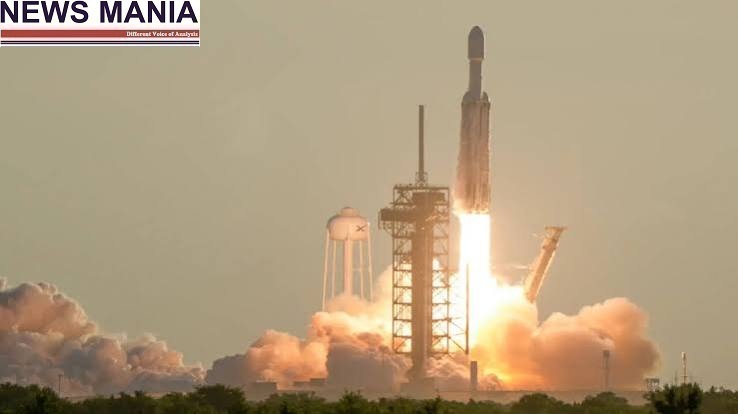
NASA’s Nancy Grace Roman Space Telescope has successfully begun its journey into space after being launched aboard a SpaceX Falcon Heavy rocket, marking a major milestone for the agency’s efforts to study the universe and investigate distant stars, planets and other unusual cosmic objects.
The $4.3 billion observatory lifted off on August 30 and was subsequently separated from the rocket’s upper stage, allowing it to begin travelling independently towards its planned destination. The spacecraft is expected to spend about three months travelling to its final operating location, roughly one million miles from Earth.
The Roman Space Telescope has been designed to conduct large-scale surveys of the universe at a speed and scale that will complement observations made by existing space telescopes. Its wide field of view is at least 100 times larger than that of the Hubble Space Telescope, allowing it to capture much larger sections of the sky in individual observations.
Scientists expect the mission to provide new information about some of the universe’s biggest mysteries, including dark energy and dark matter. The telescope will also search for exoplanets and examine unusual stars, planetary systems and other objects that could provide clues about how celestial systems form and evolve. Another important feature of the observatory is its coronagraph instrument. The technology is designed to block the intense light from stars, potentially allowing scientists to directly observe certain planets orbiting them. It will also help researchers study discs of material surrounding stars where planets may be forming.
The successful launch and spacecraft separation produced an emotional moment for NASA officials. Nicky Fox, head of NASA’s Science Mission Directorate, was visibly moved during the celebrations after the telescope successfully began its independent journey. The spacecraft is now travelling towards the second Sun-Earth Lagrange point, known as L2. From this location, it will be able to conduct its observations while maintaining favourable conditions for its instruments.