Bengaluru-Born Astronomer Ramya Anche to Lead NASA’s $20 Million PUFFINS Mission
News Mania Desk/ Piyal Chatterjee/ 18th October 2026


Bengaluru-born astronomer Ramya Manjunath Anche has been selected to lead NASA’s PUFFINS mission, an ambitious space project designed to investigate interstellar dust and its role in the evolution of stars and planetary systems. The mission, estimated to cost $20 million, is scheduled for launch in 2030 and will use ultraviolet observations to examine dust particles scattered across space.
The PUFFINS mission aims to improve scientific understanding of the material that exists between stars and how it interacts with magnetic fields. Interstellar dust, despite its microscopic size, plays an important role in the formation of stars and planets. Studying its properties could help researchers better understand the physical processes that shape galaxies and the environments in which planetary systems develop.
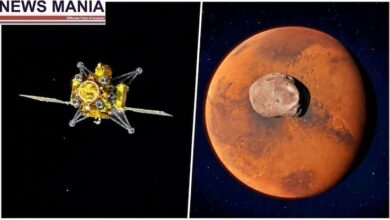
According to the report, the mission will use a small satellite equipped with a telescope measuring approximately 10 inches across. The spacecraft will observe around 70 stars using ultraviolet light, allowing scientists to investigate how interstellar dust affects the light travelling through space.
Anche’s appointment places her at the forefront of a specialised research effort that seeks to answer fundamental questions about the structure and behaviour of matter between stars. The mission’s findings could provide valuable information about the distribution of cosmic dust and its relationship with magnetic fields, which influence the movement and alignment of particles in interstellar space.
The project also reflects growing scientific cooperation between the United States and India. Indian research institutions, including the Inter-University Centre for Astronomy and Astrophysics in Pune and the Indian Institute of Astrophysics in Bengaluru, are expected to contribute to the mission.
With its planned 2030 launch, PUFFINS will add to NASA’s efforts to investigate the universe through specialised space-based observations. By examining interstellar dust around a carefully selected group of stars, the mission hopes to generate new insights into the processes that govern stellar environments and the origins of planetary systems.