
Fuel price increases in Syria spark the largest protests since the overthrow of Assad
News Mania Desk/ Piyal Chatterjee/ 15th September 2026

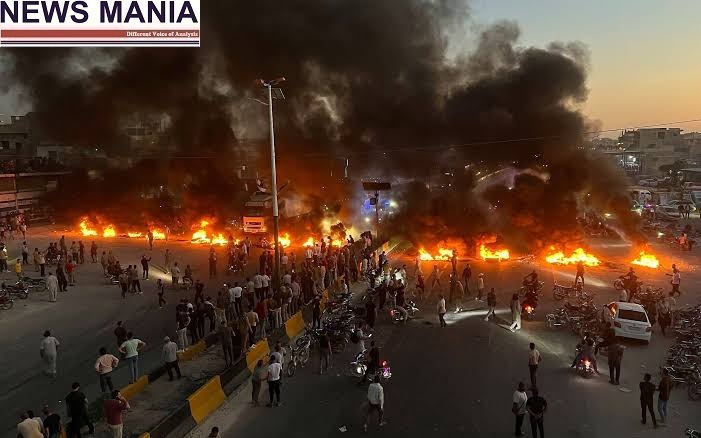
Syria’s most extensive protests since the overthrow of Bashar al-Assad nearly two years ago have been triggered by a dramatic increase in petrol prices over the weekend. After Syria’s government increased the price of fuel by 40% to 175 Syrian pounds ($1.32) per litre on Saturday, protesters set fire to tires and blocked important routes, notably the one that connects the capital city of Damascus to the industrial center of Aleppo.
The price hikes put additional strain on Syrians who have been dealing with an economic catastrophe for years. According to the United Nations Development Program, 90% of Syrians are estimated to be living in poverty, up from roughly one-third before to the start of the country’s civil conflict in 2011.
The government also increased household and industrial petrol prices by roughly 9%, 95-octane petrol by 28% to 195 pounds, and 90-octane petrol by 26% to 185 pounds, in the steepest of numerous price increases announced since the start of the Iran war.
Along with blocking crude tanker convoys headed for refineries in central Syria, protesters also called for the ouster of the Syrian Petroleum Company’s president as well as the ministers of energy and economy.
“We don’t want higher wages. All we want is lower diesel and other fuel prices,” Yasser Salim told Reuters in Aleppo. Bassam al-Ali, also protesting in Aleppo, appealed directly to President Ahmed al-Sharaa, saying the situation was untenable. “Border crossings bring in millions of dollars. We don’t want new roundabouts or malls. We just want to live,” he said.
Abdulhamid Salat, a spokesperson for the Energy Ministry, stated on Sunday that the price rises were a short-term solution brought on by rising international procurement costs and Syria’s significant reliance on imports, and they might be adjusted up or down as circumstances changed.
Syria has imported about 60,000 barrels per day of Russian crude this year, but Damascus has informed Washington that it is prepared to drastically cut back on those purchases.
Moscow has restricted petrol and diesel exports as a result of Ukrainian strikes on Russian refineries that have decreased production, putting increasing pressure on that supply.
According to a statement from Salat, prices reflected not only the cost of oil but also shortages of refined goods and increased costs associated with supply, transportation, and refining. The largest refinery in Syria, Baniyas, has been closed for three months for its first thorough maintenance operation, adding to the shortage of supplies.
Diesel has more than doubled since February, while 95-octane petrol has increased by around 86%. Benchmark Brent crude increased from $72.48 to $104.61 per barrel, a 44% increase.