Save Young Hilsa Today, Fill Bengal’s Nets Tomorrow
BUDDHADEB MISRA/ 30th September 2026

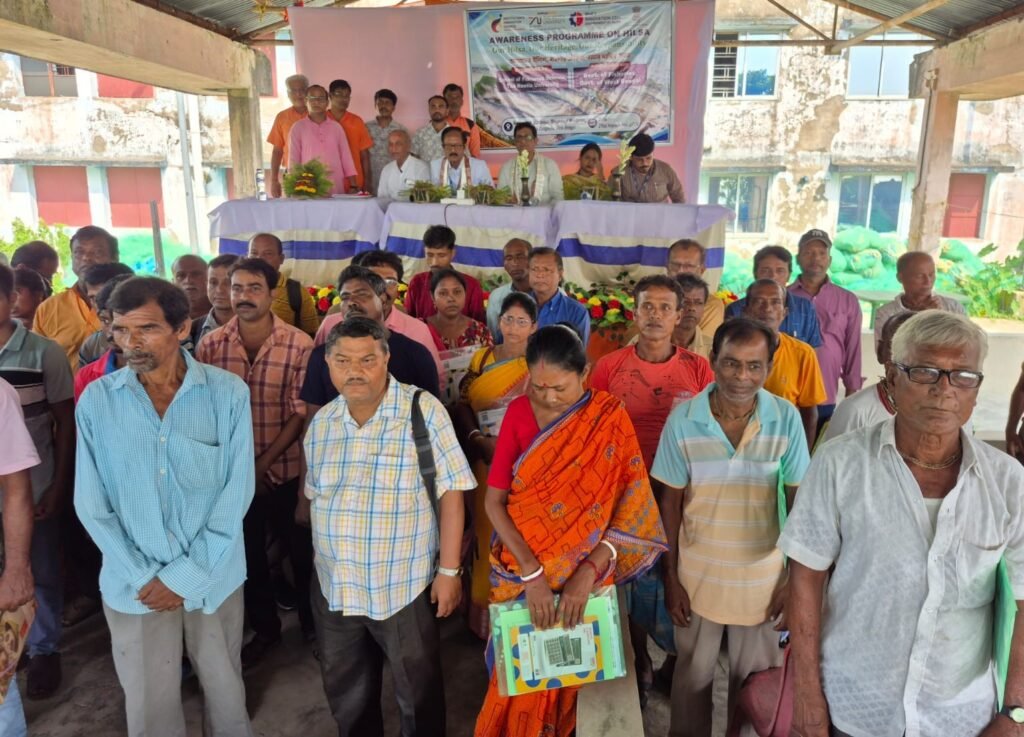
Fishers at Sultanpur Harbour take the Hilsa conservation pledge as The Neotia University and the West Bengal Fisheries Department join hands to protect Bengal’s favourite fish.
In Bengal, Hilsa is far more than a fish. It is a festival meal, a family tradition and a source of income for fishing families along the coast and rivers. Keeping it that way depends on a few simple choices: letting young Hilsa grow, protecting breeding fish and keeping the rivers and estuaries they depend on healthy.
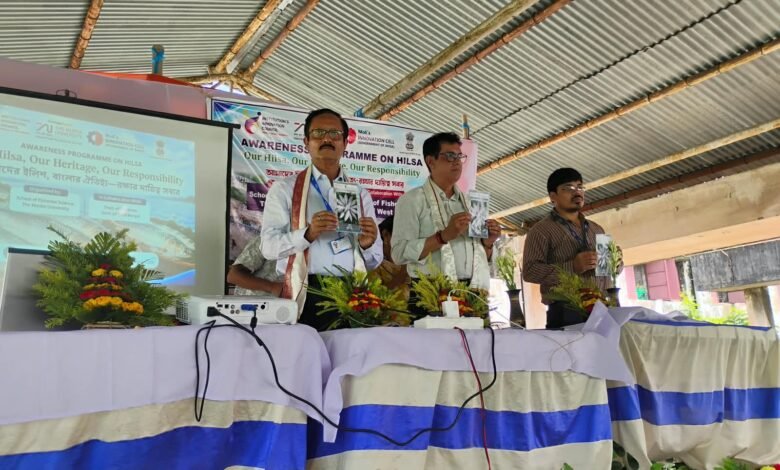
With this message, the School of Fisheries Science, The Neotia University, in collaboration with the Department of Fisheries, Government of West Bengal, organised a Hilsa awareness programme at Sultanpur Harbour, South 24 Parganas, under the theme “Our Hilsa, Our Heritage, Our Responsibility.” The programme brought local fishers and fish farmers face to face with university scientists and Fisheries Department officials to discuss conservation, responsible fishing, and the future of fishing livelihoods. In the awareness programme at total of 80 fishermen of Diamond Harbour and the other places of South 24 Parganas district participated in the said programme.
Science and Experience, Working Together
Welcoming the gathering, Dr. B. N. Paul, Dean, School of Fisheries Science, spoke about the close link between Hilsa and Bengal’s food culture, nutrition and fishing economy. He explained why juvenile Hilsa must be allowed to grow and why breeding fish need protection during the reproductive season. Conservation works best, he said, when scientific knowledge is combined with the practical experience of fishing communities.
In his inaugural address, Mr. Surojit Bag, Assistant Director of Fisheries (Marine), Sultanpur Harbour, urged fishers to follow fishing regulations and use only permitted gear. He made it clear that stopping the catch and sale of undersized Hilsa is a shared responsibility. Fishers, traders and sellers all have a part to play.
Dr. Arunansu Halder, Hon’ble Vice-Chancellor, The Neotia University, stressed that education and research must go beyond the campus and reach the communities that need them most. He called for closer cooperation between the university, the Fisheries Department and fishing communities, and recognised the role of teachers, students and local residents in protecting natural resources for future generations.
Key Conservation Messages
The awareness session walked participants through the life of a Hilsa, from its journey out of the sea and up the rivers to breed, to the habitats young fish need to grow. The
key messages were practical and easy to act on:
Protect juvenile Hilsa. Do not catch or sell undersized fish.
Use nets with the prescribed mesh size and only permitted gear.
Respect seasonal and area-based fishing restrictions.
Recognise the threats from overfishing, pollution and barriers that block fish migration.
Help keep the rivers and estuaries that sustain Hilsa clean and healthy.
Speakers also pointed out Hilsa’s value as food, rich in protein and lifestyle disease preventing Omega-3. Their message was simple: protecting this fish today protects the income and nutrition of fishing families tomorrow.
Fishers Have Their Say
An open interactive session gave fishers, fish farmers, government officials and faculty members the chance to speak directly with each other. Fishers shared their experiences on the water, the everyday difficulties they face and their own ideas for conservation. The discussion showed how local knowledge and scientific research can strengthen each other in managing Hilsa fisheries.
A Collective Pledge for Hilsa
The programme ended on a strong note, with participants taking the Hilsa conservation pledge. They committed to protecting juvenile Hilsa, practising responsible fishing and keeping rivers and estuaries clean.
The message from Sultanpur Harbour was clear. Hilsa will stay in Bengal’s nets and on its plates only if the university, the Fisheries Department and fishing communities protect it together, starting today.