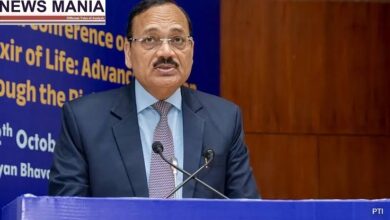
PM Modi questions India Inc over salary hikes and job creation despite tax relief
News Mania Desk/ Piyal Chatterjee/ 19th November 2026


Prime Minister Narendra Modi on Thursday questioned India’s industrial leaders over whether companies had increased employee salaries or expanded hiring despite receiving tax concessions and other government support, urging businesses to contribute more directly towards employment generation and economic growth.
Addressing the annual general meeting and convention of the Federation of Indian Chambers of Commerce and Industry (FICCI) in New Delhi, Modi highlighted several measures undertaken by the government to improve the business environment. He pointed to the reduction in the basic corporate tax rate from 30% in 2014 to 22%, simplified tax return and refund procedures, and Goods and Services Tax (GST) reductions on several products.
However, he challenged business leaders to demonstrate whether these measures had translated into higher wages and additional employment. Referring to the income-tax relief provided to individuals earning up to Rs 12 lakh annually, Modi asked whether companies had increased salaries or recruited more workers following the government’s concessions.
He criticised what he described as industry’s tendency to continue demanding more support without adequately contributing to workers’ welfare. The Prime Minister remarked that businesses often expected the government to take the lead, questioning whether such an approach could continue indefinitely.
Modi also recalled an interaction with Income Tax Department officials during his tenure as Gujarat chief minister around 2001-02, when he questioned the practice of treating taxpayers as potential offenders. He said every citizen and institution had a responsibility towards the country and deserved to be treated with respect, emphasising the importance of recognising taxpayers’ contributions.
The Prime Minister invoked Mahatma Gandhi’s message of Swadeshi and self-reliance, arguing that Indian businesses should strengthen domestic manufacturing and reduce dependence on foreign products. He questioned why the principles of indigenous production and Atmanirbhar Bharat continued to require repeated reminders, despite Gandhi having advocated them nearly a century ago.
He also urged companies not to treat India’s population of 140 crore as a guaranteed market for their products. Calling for greater emphasis on quality, Modi criticised the practice of offering products marketed as “export quality” to overseas consumers while questioning whether Indian customers were receiving comparable standards. He encouraged businesses to improve product quality, understand international markets and build stronger overseas distribution networks.
The Prime Minister further asked industry leaders to capitalise on India’s trade agreements with several countries, saying the deals had opened new avenues for domestic businesses. He urged companies to develop strategies to take advantage of these opportunities instead of relying solely on the government to identify potential markets.
Highlighting India’s pharmaceutical sector, Modi pointed to the country’s continued dependence on imported active pharmaceutical ingredients (APIs), bulk drugs and drug intermediates. He called for investments in technology, manufacturing facilities and domestic production capabilities to reduce imports and strengthen the industry’s global competitiveness. Modi also invited industry representatives to share suggestions on further reforms, describing the government as one willing to engage with businesses and address their concerns.