ICJ rules Myanmar committed genocide against Rohingya in landmark verdict
News Mania Desk/ Piyal Chatterjee/ 19th November 2026

The International Court of Justice (ICJ), the United Nations’ highest judicial body, has ruled that Myanmar committed genocide against the Rohingya Muslim minority during the military crackdown in 2017, marking a landmark decision in a case brought by The Gambia over alleged violations of the Genocide Convention.
The judgment, delivered in The Hague on November 19, 2026, found Myanmar responsible for genocidal acts against the Rohingya population in northern Rakhine State. The court examined evidence of killings, sexual violence, attacks on children and the destruction of communities during the military operation that forced hundreds of thousands of Rohingya to flee the country.
The proceedings were initiated by The Gambia in 2019, which accused Myanmar of violating the 1948 Genocide Convention. The case focused on whether the military campaign against the Rohingya constituted genocide under international law and whether Myanmar had failed to fulfil its obligations to prevent and punish the crime.
The court’s ruling highlighted the scale of violence inflicted on the Rohingya during the 2017 operation. Evidence presented before the judges indicated that approximately 10,000 people were killed, while numerous others were subjected to physical abuse, sexual violence and forced displacement. The court also examined accounts of attacks on children and civilians attempting to escape across the border into Bangladesh.
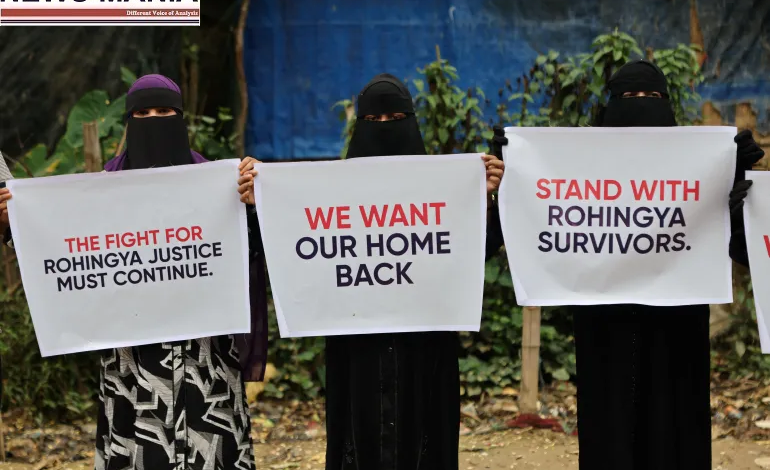
Judges concluded that the evidence demonstrated genocidal intent directed towards a substantial part of the Rohingya population. The decision was passed by a 9-6 majority, underscoring the legal significance of the proceedings and the differing interpretations of the evidence among members of the court. The ruling also addressed Myanmar’s obligations under international law to respond to the consequences of the atrocities. The court called for measures addressing restitution, rehabilitation and compensation, alongside efforts to facilitate the safe and voluntary return of Rohingya refugees to their homes.
The violence triggered a massive displacement crisis, with more than 1.2 million Rohingya refugees continuing to live in Bangladesh, largely in overcrowded camps around Cox’s Bazar. Many fled Myanmar following the military crackdown, while conditions in the refugee settlements remain difficult, with limited access to resources, employment and essential services.
The ICJ’s decision is legally binding on Myanmar, although the court has limited mechanisms to enforce its rulings. The judgment nevertheless carries considerable international significance, establishing legal responsibility and reinforcing the obligations of states under the Genocide Convention. The case has drawn international attention to the treatment of the Rohingya, a minority group that has faced decades of discrimination, restrictions on citizenship and movement, and repeated episodes of violence in Myanmar. The 2017 military operation intensified the crisis and prompted widespread condemnation from governments and human rights organisations.