Protests in Delhi put daily business worth over ₹400 crore at Risk; Estimated exposure could reach ₹4,000 crore over ten days
News Mania Desk/ 18th October 2026

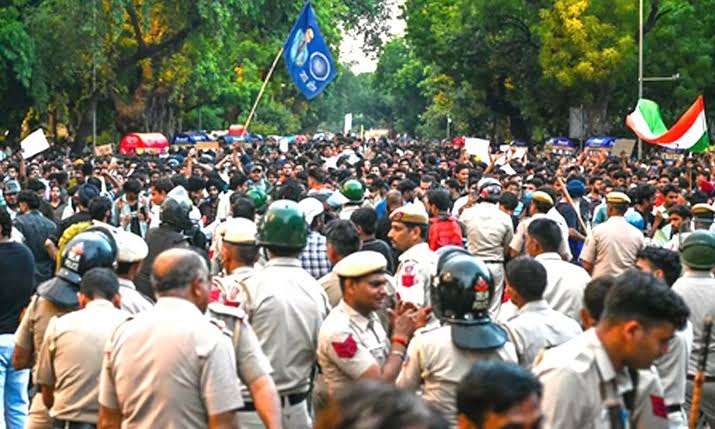
If protesters have the right to freedom of speech and peaceful assembly, traders equally deserve the right to conduct business and earn their livelihood
Expressing serious concern over the growing impact of protests in Delhi in past days, Shri Praveen Khandelwal, Member of Parliament from Chandni Chowk and Secretary General of the Confederation of All India Traders (CAIT), said that prolonged disruptions could put business transactions worth over ₹400 crore at risk every day, with the cumulative impact potentially reaching ₹4,000 crore over ten days.
He said that Delhi’s estimated average daily business turnover of approximately ₹2,200 crore makes the capital’s commercial ecosystem particularly vulnerable to disruptions. Even a 10% decline in business activity would affect transactions worth ₹220 crore daily, rising to ₹330 crore at 15% and ₹440 crore at 20%. Based on these indicative estimates, the potential impact over ten days could approach ₹4,000 crore if disruptions persist at the higher end of this range. He clarified that these figures represent an indicative estimate of business activity at risk and not a verified accounting of actual losses.
Shri Khandelwal stated that the Constitution protects freedom of speech and expression under Article 19(1)(a), as well as the right to assemble peacefully and without arms under Article 19(1)(b). At the same time, Article 19(1)(g) protects the right to practise any profession or to carry on any occupation, trade or business, subject to reasonable restrictions permitted by the Constitution.
He said that democratic rights must coexist with the rights and legitimate interests of other citizens. The exercise of one fundamental right should not be viewed in isolation from its impact on the lawful activities, economic security and livelihoods of others. The objective should be to preserve the right to peaceful democratic expression while ensuring that *ordinary citizens, traders, employees and workers are not made to bear an avoidable economic burden.
Shri Khandelwal observed that the economic consequences of protests extend far beyond the immediate locations where demonstrations take place. Traffic congestion, reduced customer footfall, disrupted transportation and logistics, restricted access to markets, shortened business hours and delays in goods movement collectively affect Delhi’s interconnected commercial network.
Small traders and businesses are among the worst affected. Even when sales decline, they must continue meeting fixed financial commitments such as shop rentals, employee salaries, electricity bills, loan instalments and other operating expenses. Business lost during critical trading days cannot necessarily be recovered later, making prolonged disruptions particularly damaging during the festive and wedding season.
The impact is not confined to retail and wholesale trade. Transporters, logistics operators, warehouses, restaurants, hotels, street vendors, delivery services and numerous ancillary businesses also face declining activity. The resulting pressure on these interconnected sectors threatens employment, daily earnings and the livelihoods of millions of people who depend directly or indirectly on Delhi’s commercial economy.
Emphasising the importance of the ongoing trading season, Shri Khandelwal said that October to January is among the most crucial periods for India’s trading community, covering major festivals, wedding-related purchases and heightened consumer spending. Disruptions during these months can have consequences extending well beyond individual markets, affecting seasonal incomes, employment, business confidence and the broader economic cycle.
“Delhi is not merely the national capital; it is one of the country’s most important centres of wholesale distribution, retail trade and commercial activity. Its markets connect manufacturers, distributors, retailers and consumers across India. Any prolonged disruption in Delhi therefore has a cascading impact on supply chains, business transactions and livelihoods far beyond the city,” Shri Khandelwal said.
He urged all concerned to ensure that democratic expression does not unnecessarily disrupt normal public life and economic activity, particularly during this critical trading season. He also stressed the need for a balanced approach that respects peaceful protest while safeguarding market accessibility, the movement of goods and the ability of citizens to earn their livelihood.
Shri Khandelwal said, “The right to protest and the right to trade are both integral to a functioning democracy. Protecting one should not mean disregarding the other. The larger public interest demands a responsible approach in which democratic expression, the rule of law, economic activity and the livelihood of millions of people are all duly respected.”