
Netanyahu Explores Plan B to Retain Power Amid Israel Election Deadlock
News Mania Desk/ Piyal Chatterjee/ 29th October 2026

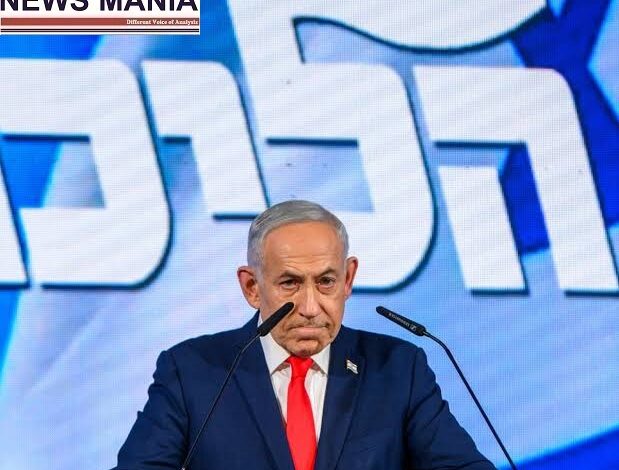
Israeli Prime Minister Benjamin Netanyahu is exploring alternative political arrangements to remain in power after the country’s election failed to deliver a clear parliamentary majority. The political deadlock has intensified negotiations over coalition formation, leaving Netanyahu and his rivals searching for a workable path to government.
Netanyahu’s Likud party is considering the possibility of a national unity government as one option to overcome the impasse. Such an arrangement could bring together political forces that have traditionally opposed one another, potentially providing the parliamentary support needed to establish a stable administration.
However, the proposal faces significant obstacles. Opposition leader Gadi Eisenkot has ruled out joining a government led by Netanyahu, limiting the scope for a broad coalition. Far-right politician Itamar Ben Gvir, an important figure in Netanyahu’s political camp, is also opposed to the proposed arrangement, adding another complication to the negotiations.
The competing positions highlight the difficulties of assembling a coalition in Israel’s fragmented political landscape. With parties divided over leadership, policy priorities and the composition of a future government, negotiations are expected to remain politically sensitive.
The election outcome has also brought scrutiny of allegations of foreign interference in the political process. Investigators are examining suspected attempts to influence the election, although the allegations have not been conclusively established. The investigation has added another layer of uncertainty to an already complicated political situation.
Questions involving the Arab-majority Ra’am party have also featured in the political debate. The party’s potential role in coalition calculations has become a contentious issue, reflecting wider divisions among Israeli political groups over which parties should be included in a governing alliance.
For Netanyahu, the immediate challenge is to secure sufficient parliamentary backing without alienating key allies or strengthening his opponents. Any alternative arrangement would require difficult compromises, particularly over the distribution of political power and the policies a new government would pursue.
The opposition, meanwhile, faces its own challenge in coordinating different parties around a common strategy. Although Netanyahu’s opponents have an incentive to prevent him from retaining office, their differing political positions could complicate efforts to form an alternative coalition. The outcome will depend on whether Netanyahu can assemble a viable governing coalition or whether rival parties can agree on an alternative administration.