UK PM Andy Burnham Open to Formal Apology for Slavery, Rules Out Financial Reparations
News Mania Desk/ Piyal Chatterjee/ 31st October 2026

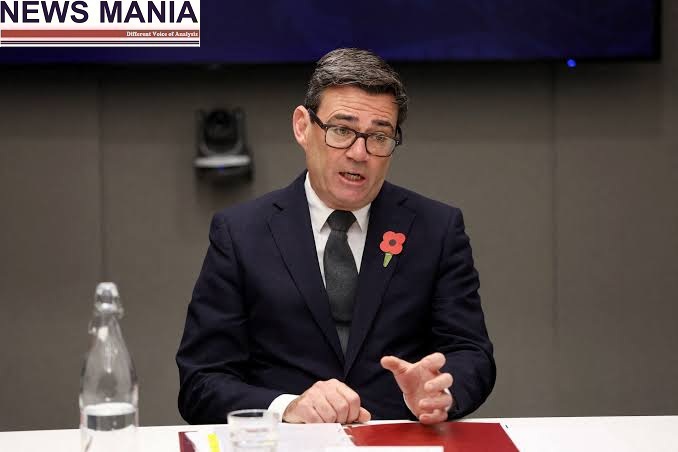
British Prime Minister Andy Burnham has expressed willingness to consider a formal apology for Britain’s historical involvement in the transatlantic slave trade but ruled out providing financial reparations to countries and communities affected by slavery. In an interview on Saturday, Burnham said he was prepared to listen to calls for a formal apology on behalf of the British state. He indicated that the government could consider structured discussions with countries and communities affected by slavery to examine the issue and explore possible ways forward.
However, the prime minister rejected the idea of direct financial compensation, arguing that people living in Britain today should not be held financially responsible for historical injustices in which they had no personal involvement. He maintained that the government could explore alternative forms of assistance rather than committing to reparations.
Burnham’s comments came ahead of the Commonwealth Heads of Government Meeting (CHOGM) in Antigua and Barbuda, where demands for reparatory justice are expected to feature prominently. Several Caribbean leaders have called on Britain and other former colonial powers to acknowledge the lasting economic and social consequences of slavery.
Historical estimates suggest that approximately 12.5 million Africans were forcibly transported across the Atlantic during the transatlantic slave trade. Britain was responsible for transporting around 3.2 million enslaved Africans, making it one of the principal participants in the trade before its abolition.
As an alternative to direct compensation, Burnham proposed a debt-relief initiative aimed at helping vulnerable Commonwealth countries manage their financial obligations. The proposal would allow these nations to repay loans over longer periods and potentially benefit from more favourable interest rates. Former British prime minister Gordon Brown is expected to assist in developing the initiative.
The debate has also gained attention following remarks by King Charles III during his recent Caribbean tour. The monarch acknowledged the suffering and injustices caused by slavery but stopped short of issuing a formal apology for Britain’s historical role.
Caribbean leaders have responded cautiously to Burnham’s proposal. Antigua and Barbuda Prime Minister Gaston Browne welcomed the British leader’s willingness to engage in discussions but maintained that the region’s demand for reparatory justice remained unchanged. Barbados Prime Minister Mia Mottley also welcomed the prospect of dialogue while reiterating the differences over compensation.
The issue of slavery reparations has remained a source of tension between Britain and several Caribbean nations. While Burnham’s willingness to consider an apology signals an openness to further discussions, his rejection of direct financial compensation highlights the continuing disagreement over how historical injustices should be addressed.