Why Bengali food tastes different when ground on a traditional shil nora instead of a mixer-grinder
News Mania Desk/ Piyal Chatterjee / 31st October 2026

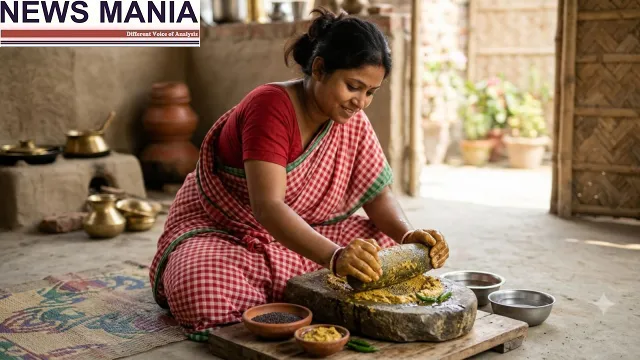
Traditional Bengali cuisine owes much of its distinctive flavour and texture to an age-old kitchen tool, the shil nora. From mustard paste used in shorshe ilish to poppy seed preparations in aloo posto, grinding ingredients on this traditional stone produces results that can differ significantly from those achieved with a modern mixer-grinder.
The difference lies in the grinding process. While a mixer-grinder uses rapidly rotating blades to cut ingredients, a shil nora crushes and rubs them against a stone surface through sustained pressure. This method helps release natural oils, juices and aromatic compounds, contributing to the characteristic flavours of traditional Bengali dishes.
One of the clearest examples is shorshe ilish, a popular Bengali preparation made with mustard paste and hilsa fish. Grinding mustard seeds on a shil nora allows better control over the paste’s consistency and pungency. The process helps release compounds responsible for mustard’s distinctive sharp flavour.
Similarly, aloo posto, prepared with potatoes and poppy seed paste, benefits from traditional stone grinding. The shil nora produces a thick, creamy paste with a rich, nutty taste while helping retain the desired consistency.
The technique is also important in preparing Bengali bhortas, including begun pora and aloo bhorta. Stone grinding allows ingredients to retain some texture instead of turning into a completely smooth puree. In preparations such as dal bora, gradually crushing soaked lentils helps maintain slight coarseness, contributing to a crisp exterior and soft interior.
According to cookery columnist and author Rukma Dakshy, the difference is not merely about nostalgia but also about how traditional grinding influences ingredients. The continued use of the shil nora in Bengali cooking highlights the importance of traditional techniques in preserving the distinctive taste, aroma and texture of regional food.