
The science of re-entry: NASA’s Swift telescope set to return to Earth this week
News Mania Desk/ Piyal Chatterjee/ 3rd November 2026

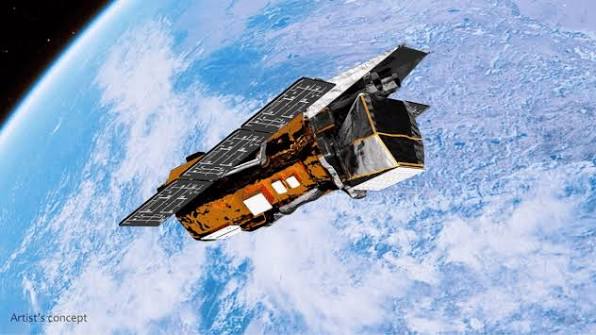
NASA’s Swift Observatory, a space telescope that has remained operational for 22 years but could not be saved through a rescue mission, is expected to re-enter Earth’s atmosphere on or around Friday, November 6. India is among the regions falling within the broad potential re-entry zone where surviving fragments could land.
According to the Associated Press, the possible space debris zone also covers parts of Africa, Australia, Southeast Asia, and Central and South America. Brad Cenko, principal investigator for Swift at NASA’s Goddard Space Flight Center, said most of the 1.4-tonne telescope would burn up during its descent. However, some components made of tungsten, a metal denser than lead, along with sections of its mirrors, could withstand the extreme heat. Any surviving fragments are expected to fall into the ocean.
The US Space Force, which is monitoring the observatory’s declining orbit, has forecast its atmospheric re-entry around Friday. However, the predicted date could change as the telescope continues to descend. Launched on November 20, 2004, NASA’s Swift telescope was designed to study gamma-ray bursts, among the most powerful explosions in the universe, as well as supernovas and other high-energy cosmic events. Its original primary mission was planned to last just two years.
During its 22 years in space, Swift detected more than 2,000 gamma-ray bursts and 1,400 supernovas. It also observed comets, asteroids and black holes. Named after its ability to rapidly turn towards emerging cosmic events, the observatory served as an early-warning system for other space telescopes, including Hubble and the James Webb Space Telescope.
The process of satellite re-entry begins when atmospheric drag gradually slows an object in low Earth orbit, causing it to lose altitude. As it encounters denser atmospheric layers, intense heat breaks down most components, although certain materials can survive.
NASA says Swift’s orbit is inclined at 20.6 degrees to the equator, restricting its trajectory to latitudes within approximately 20.6 degrees north and south. In India, the potential zone includes areas south of a line extending from Daman to Cuttack, covering cities such as Mumbai, Hyderabad, Bengaluru and Chennai. However, inclusion in the re-entry zone does not mean debris will necessarily land in these locations.