Israel Political Deadlock Deepens as President Herzog Consults Parties on Next Prime Minister
News Mania Desk/ Piyal Chatterjee/ 6th November 2026

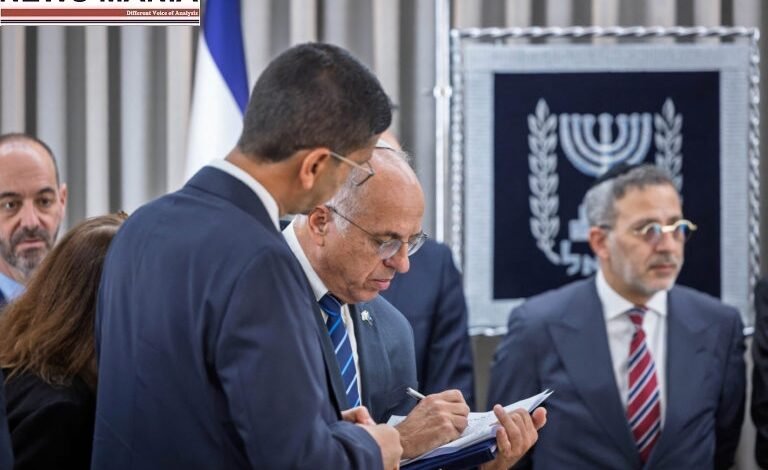
Israel is facing a fresh political deadlock following an inconclusive parliamentary election, with President Isaac Herzog holding consultations with political parties to determine who should receive the mandate to form the next government. Prime Minister Benjamin Netanyahu and opposition leader Gadi Eisenkot have emerged as the principal contenders, as both sides attempt to secure sufficient support to establish a governing coalition.
The October 27 election failed to deliver a clear majority in Israel’s 120-member Knesset, leaving the country’s political future uncertain. Netanyahu’s Likud-led alliance secured 53 seats, while the opposition alliance led by Eisenkot won 48. The remaining seats have become crucial in determining which political camp can gather enough parliamentary support to form the government.
The outcome has placed considerable importance on smaller political parties, particularly Arab-led groups and ultra-Orthodox factions. Arab-led parties secured a record 19 seats, giving them significant influence in the coalition negotiations. Their support could prove decisive in determining the country’s next prime minister.
The Ra’am party, an Arab-led political group, has backed Eisenkot, strengthening the opposition leader’s position. Meanwhile, the ultra-Orthodox United Torah Judaism (UTJ) party has declined to recommend either candidate, creating further uncertainty for Netanyahu’s Likud-led bloc.
President Herzog’s consultations are expected to play a crucial role in resolving the political impasse. Under Israel’s parliamentary system, the President selects the candidate he believes has the strongest possibility of securing parliamentary backing and successfully forming a government. The candidate must then negotiate with other parties to assemble a coalition capable of commanding a majority in the Knesset. Herzog faces pressure to encourage political compromises and prevent the country from heading towards another election. He has until November 11 to decide which candidate should receive the opportunity to form the next government.
The political uncertainty comes at a challenging time for Israel, with domestic divisions and the consequences of regional conflicts continuing to shape public debate. The election results have also highlighted the growing influence of smaller parties in determining the country’s political direction. Meanwhile, allegations of electoral interference have added another dimension to the controversy, although election officials have reported no evidence of irregularities that compromised the results.
The coming days are expected to be decisive for Israeli politics, as Herzog’s decision could determine whether Netanyahu manages to retain power or Eisenkot gets an opportunity to lead a new coalition. If neither side succeeds in securing sufficient parliamentary support, Israel could face another round of elections, prolonging the country’s political uncertainty.